In March 1932 the first regular air passenger service between Tasmania and Flinders Island was introduced by pilot and flying instructor L. M. (Laurie) Johnson.
His Desoutter II single-engined monoplane, given the name Miss Flinders, had been flown out from England between December 1931 and February 1932.
The plane, which could only carry two passengers, had a cruising speed of 140 to 160 kilometres an hour and the trip to Whitemark from Western Junction took about an hour.
Laurie Johnson had been the Tasmanian manager of Essendon-based Matthews Aviation who in 1930 had started a short-lived air service between Melbourne and Tasmania.
The Flinders Island service ran on Tuesdays and Fridays and on other days he offered joy flights from Western Junction and other airstrips.
In the first three months of operation Laurie Johnson’s Flinders Island Airways made 56 return flights to Whitemark carrying a total of 85 passengers as well as mail and freight.
Victor Holyman, who had been a World War I fighter pilot and was a ships captain in his family’s shipping company, watched the progress of the new air service closely.
Holymans, based in Launceston, operated numerous vessels across Bass Strait, including services to Flinders Island.
In September 1932 Holymans took delivery of a new de Havilland Fox Moth bi-plane to also service Flinders Island. The Fox Moth could carry four passengers at a maximum speed of 170 kph.
The Holymans called their plane Miss Currie.
Within weeks Laurie Johnson had agreed to merge with Holymans in a new company called Tasmanian Aerial Services.
The merger enabled the fledgling airline to expand its services along the Tasmanian coast to Latrobe, Wynyard, Smithton and King Island.
The success of these new services encouraged the airline to buy two eight-seater de Havilland biplanes they named Miss Launceston and Miss Hobart.
A service to Melbourne was introduced with the main pilots being Laurie Johnson and Victor Holyman. Tragically, in 1934 Victor Holyman and his passengers in Miss Hobart disappeared near Wilsons Promontory.
In 1935 Miss Flinders was sold back to de Havilland.
Laurie Johnson continued flying with Tasmanian Aerial Services which under Holymans management would grow into Australian National Airways, the biggest airline in Australia in the 1940s.
In later life Miss Flinders returned to Launceston, being on display at Launceston Airport, then a major exhibit at the Queen Victoria Museum at Inveresk, and finally back to Launceston Airport.
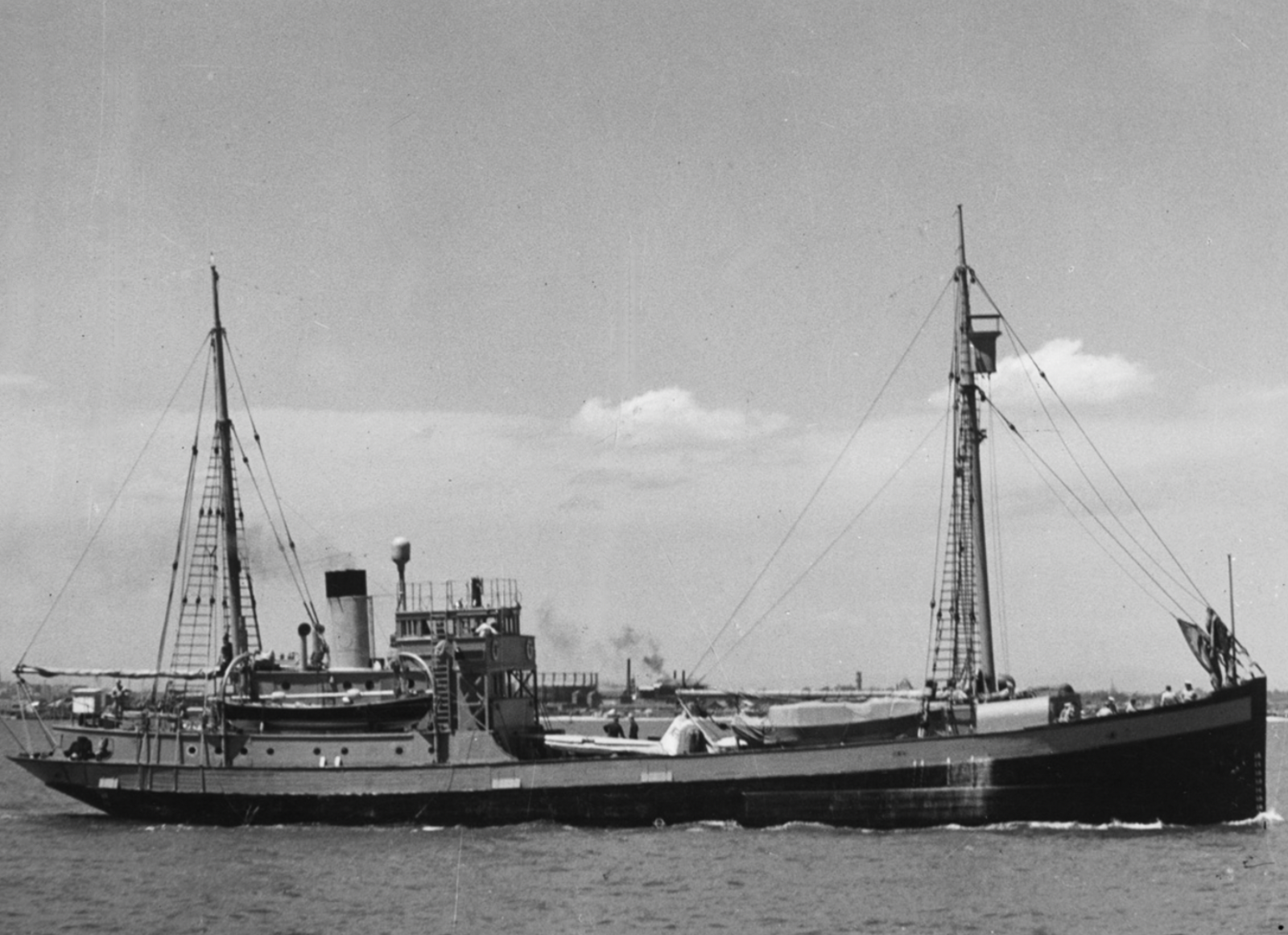
In 1947 a Norwegian-built cargo ship and a former Royal Navy tank landing craft set sail on the first Australian National Antarctic Research Expedition. They were an odd couple; the ship had become HMAS Wyatt Earp and the landing craft was simply known as HMLST 3501.
After their pioneering voyages to Antarctica one of the ships would carry potatoes from North-West Tasmania to the mainland and end its career wrecked on the Queensland coast and the other would be scrapped.
As MV Fanefjord, the 41m timber ship Wyatt Earp was bought by American explorer and Arctic aviator Lincoln Ellsworth in 1919. The ship had been refitted inside and its hull strengthened with steel plate. Ellsworth renamed the ship Wyatt Earp in honour of the marshal of Dodge City and Tombstone, in Arizona.
The ship made several trips to Antarctica under Ellsworth’s ownership and famous Australian explorers Sir Douglas Mawson and Sir Hubert Wilkins were part of his expeditions. Ellsworth had flown over the Arctic Ocean in 1929 in a balloon with Norwegian explorer Roald Amundsen and was successful in completing the first trans-Antarctic flight in 1935.
In 1939 the Australian government bought the Wyatt Earp and renamed it HMAS Wongala, an Aboriginal word meaning boomerang. Its war service was spent mostly as a coastal patrol vessel in South Australia.
After the war the ship was refurbished and reverted to Wyatt Earp, with the HMAS prefix, for Australia’s first Antarctic expeditions in 1947-1948 to establish research stations at Macquarie and Heard islands.
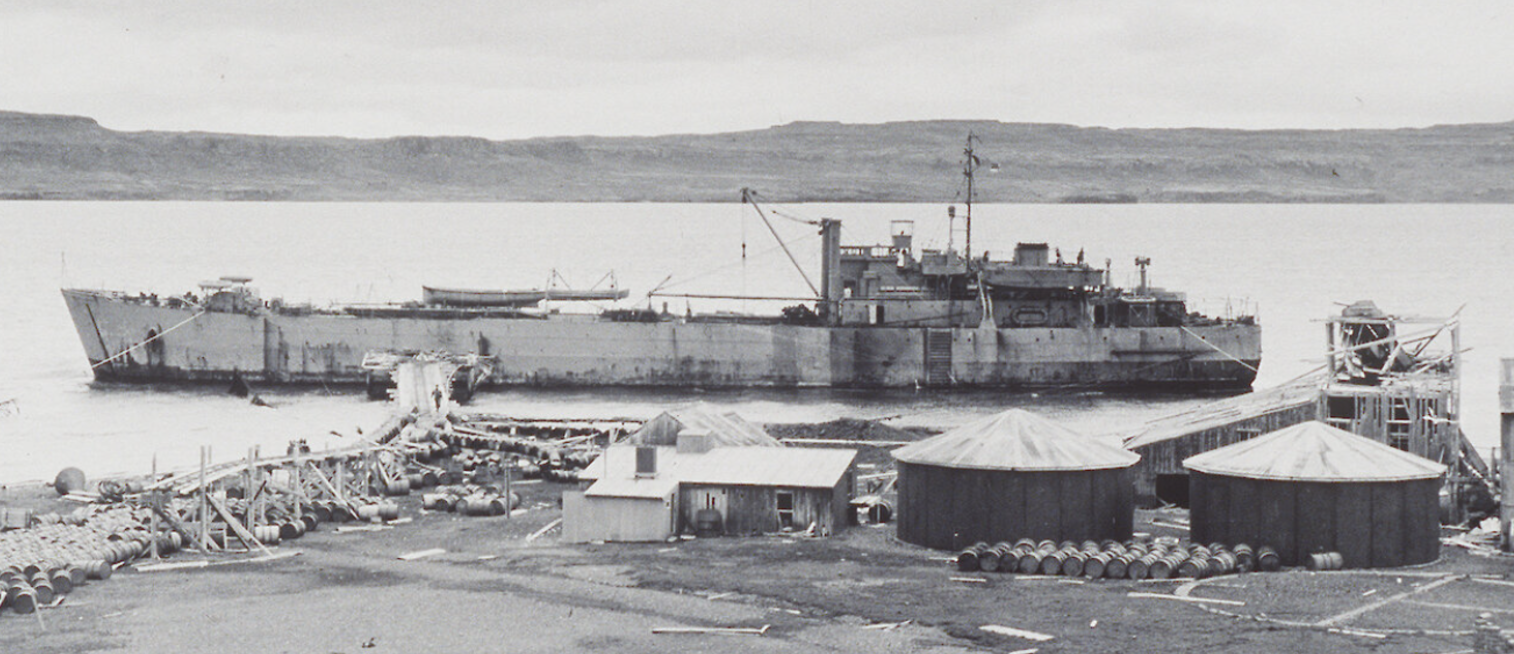
The HMLST 3501 (Her Majesty’s Landing Ship Tank) was 105m long, twice the length of Wyatt Earp, and had been built in Canada in 1943 for the Royal Navy and saw service in the Mediterranean and Atlantic during World War II before being sold to the RAN.
The ships left separately for the Southern Ocean with HMLST 3501, under the command of Lieutenant-Commander George Dixon, departing from Fremantle in October 1947 for Heard Island, halfway between Australia and Africa. HMAS Wyatt Earp, under the command of Captain Karl Oom, departed Hobart in December for Commonwealth Bay in Antarctica.
HMLST 3501 arrived at Heard Island at the end of December where navy personnel landed supplies, erected prefabricated buildings and installed equipment for eight scientists and support staff to spend a year undertaking meteorological and other research.
The ship then made a reconnaissance of ice conditions in the far south and headed for Macquarie Island, 5,250km to the east and 1,450km south-east of Hobart, to establish the other station where seven scientists and support staff would spend a year.
Both ships carried seaplanes, crewed by RAAF personnel, to make reconnaissance flights over Antarctica. HMLST 3501 had been painted bright yellow to help the seaplane crew find the ship after their flights.
Lieutenant-Commander J. H. T. (Jack) Burgess (the author’s uncle), whose family lived in Launceston, was the executive officer on HMLST 3501.
After HMAS Wyatt Earp left Hobart in December 1947 for Antarctica, 2,700km south of Tasmania, bad weather and mechanical problems forced it back to Melbourne for repairs. It was reported that everyone on board had been violently seasick.
The ship had to be put into the Williamstown dry dock and wasn’t able to continue its voyage south until early February 1948. Despite more mechanical problems, bad weather and heavy ice, HMAS Wyatt Earp finally arrived off Antarctica on 19 February.
However, it could not close the Antarctic mainland due to pack ice and more bad weather. By March plans to reach land were abandoned and the ship headed for Macquarie Island where HMLST 3501 had already unloaded its cargo of stores, prefabricated buildings and scientific equipment.
Both ships then returned to Australia. After the voyage the master of HMAS Wyatt Earp, Captain Oom, reported that the ship was too old, too slow and too small for further Antarctic expeditions.
The Antarctic Division of the Department of External Affairs was created in May 1948 to administer and coordinate Australia’s future expeditions and on 30 June HMAS Wyatt Earp was paid off in Melbourne.
Although reported as an uncomfortable ship by its crew, HMLST 3501 continued as an Antarctic supply vessel. It was given a more dignified name in December 1948 when it was renamed HMAS Labuan, in honour of World War II amphibious landings on the Malaysian island.
HMAS Labuan made five more supply voyages to the Heard and Macquarie island research stations before being badly damaged near Heard Island in 1951. Labuan was paid off by the navy in September 1951 and sold for scrap in 1955.
HMAS Wyatt Earp was bought by the Arga Shipping Company in Victoria in 1951 and renamed Wongala, one of its former names. It was put to work carrying cargo between Tasmania and the mainland.
There was another ownership change in 1956 when the ship was acquired by the Ulvertstone Shipping Company. Re-named again, this time MV Natone for the potato growing district of Natone near Ulverstone. The ship traded in Tasmania for 18 months before moving to Queensland where it was wrecked in January 1959 near Rainbow Beach.
A camping area on the Inskip Peninsula is named in honour of MV Natone, the former Australian navy ship and Antarctic exploration vessel, that had carried the name of a hero of America’s Wild West!
(Corrections made on 20 January 2025 thanks to Trish Burgess (no relation) the author of WYATT EARP, The Little Ship With Many Names, Connor Court Publishing)
Images — TOP: HMAS Wyatt Earp. BOTTOM: Her Majesty’s Landing Ship Tank 3501 at Heard Island in 1948.
In November 1946 it was announced that General Motors-Holden’s Ltd had reached an agreement to take over the Tool Annexe at the Launceston Railway Workshops to produce tooling for its proposed Australian-made car.
GMH had responded to a request from the federal government in 1945 to make a mass-produced Australian car. Up to this time most cars sold in Australia were either fully imported or assembled from components from overseas car makers.
The Examiner of Wednesday, November 20, 1946, reported that production details had been discussed between the GMH technical superintendent (Mr W. G. Davis). the Secretary for Transport (Mr A. K. Reid) and the administrative officer at the annexe (Mr P. H. Welch).
“Mr Davis will remain in Launceston as technical superintendent of production. He has had wide experience in engine manufacture … and recently joined General Motors as assistant chief inspector of mechanical operations.”
The Examiner said that since the end of World War II the Tool Annexe has been conducted by the Tasmanian Transport Commission and has been turning out tractor parts of such precision that only one-half of one per cent were rejected.
Mr Davis said various types of punches, dies, trimming tools, component parts and very large assembly jigs for sub-assembly and final assembly of panel would be made.
“The modern and very valuable equipment in the annexe and the high standard of workmanship attracted General Motors, and work which began in Launceston this week is one of the first practical steps in the actual production of Australian cars.”
Details of Australia’s first locally made car slowly emerged as production facilities were set up around the country.
At Woodville in South Australia the bodies and metal pressings for the new car were being produced at a £1,744,000 factory and at Fishermen’s Bend in Melbourne a 12,000 square metre plant was built for the manufacture of the engine, transmission and other basic car components.
GMH said that when the car was in full production it would provide direct employment for about 9000 Australians and indirect employment for thousands more in businesses supplying raw materials or specialised components for the new car.
It was announced that the new car would be simply called the Holden and would be priced at £733, which was about two years’ wages for an average worker at the time.
By the time Prime Minister Ben Chifley unveiled the first Holden 48-215 (later known as the FX) on November 29, 1948, it was announced that 18,000 people had already paid a deposit.
The first Holden car to come to Tasmania was unveiled by the Premier Robert Cosgrove in Hobart the following day. He said the development of the Holden marked Australia’s “growing up as a nation.”
Australians embraced the first locally mass-produced car and over the next five years 120,402 Holden vehicles were manufactured and sold.
Image — TOP: Holden cars roll off the Fishermen’s Bend production line factory. State Library of Victoria, public domain image.
Written for the Launceston Historical Society and published in The Sunday Examiner, on 29 October 2023.
Only one of the three factories at Mowbray designed by renowned Melbourne industrial architect Graeme Lumsden in the late 1940s is still standing.
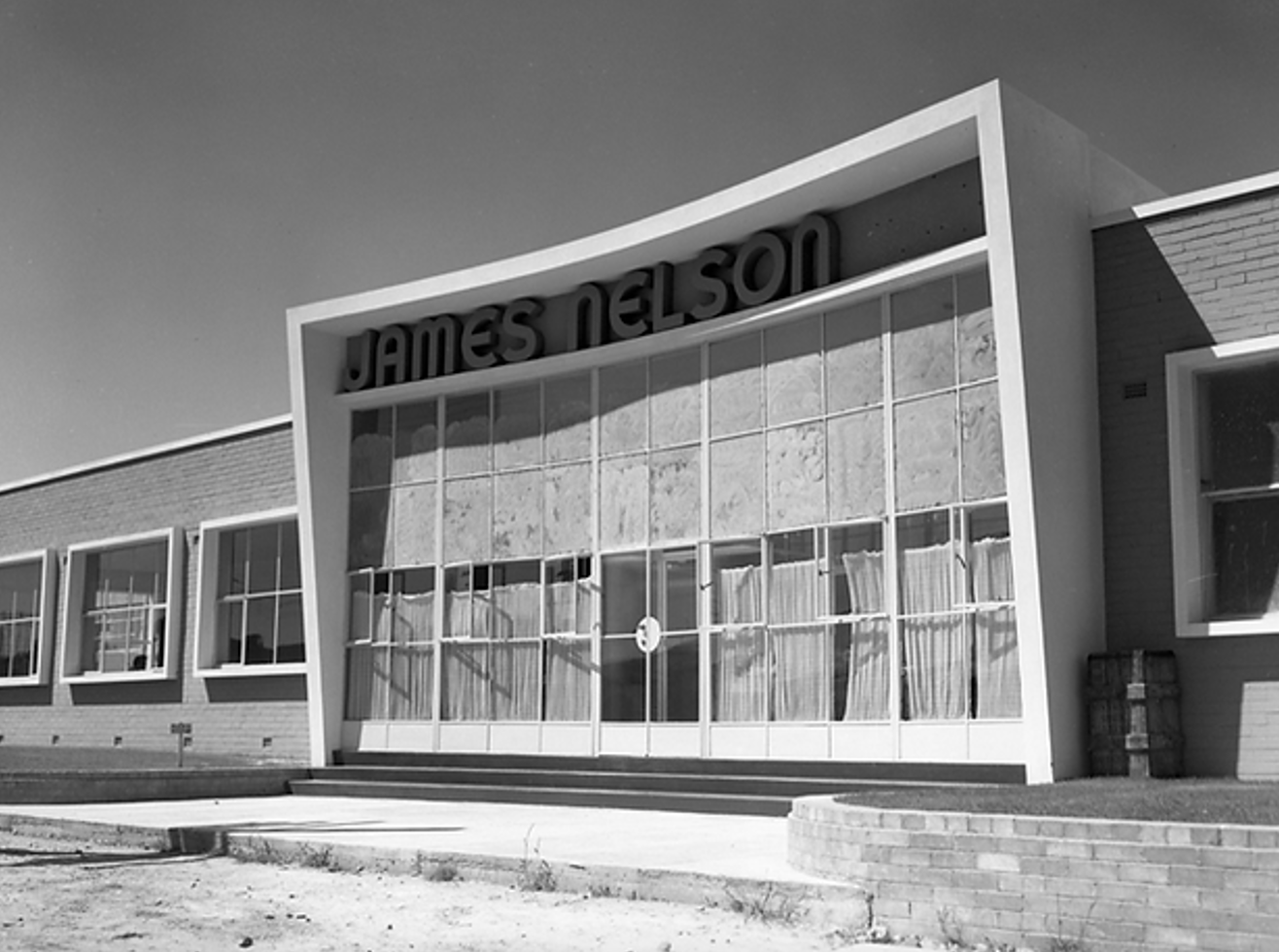
It was a period when port-war prosperity allowed more aesthetic industrial buildings and the most distinctive of Mr Lumsden’s Tasmanian commissions, the James Nelson factory, was described in the Launceston Heritage Study of 2006 as an early example of an “international style” industrial building.
According to the website of Victorian architectural historians Built Heritage Pty Ltd, the Replacement Parts (later Repco and now ACL) factory at 310 Invermay Road, was designed in 1947 when Mr Lumsden was in partnership with leading Melbourne architect Arthur Purnell.
After setting up his own architectural practice in 1948, Mr Lumsden designed factories for Modern Transport and Metal Industries (MTM Industries), at 316 Invermay Road, Mowbray, and the electrical fittings maker CGC Manufacturing Company in Howard Street, Invermay.
The James Nelson factory, at 298-308 Invermay Road, was designed in 1949 and the following year he designed a textile factory at Devonport for the Tootal Broadhurst Lee Company Ltd.
His Tasmanian work led to numerous major commissions in Victoria. Both the MTM factory and the James Nelson factory have only recently been demolished.
Graeme Lumsden’s obituary in the Melbourne Age on 17 August 1995, said he was one of Australia’s most successful industrial architects and factories he designed in Victoria included projects for Leyland Motors, Volkswagen Australia, Peters Ice Cream, Specialty Press, Repco, Glaxo and Bowater Paper.
Of his Tasmanian projects the James Nelson factory was perhaps his most noteworthy.
James Nelson Ltd, of Valley Mills, in Nelson, Lancashire, was the last of the British companies to build textile factories in Launceston. The Patons and Baldwins knitting yarn mill at Glen Dhu, and Kelsall and Kemp, at Invermay, which produced flannel, had both commenced production in 1923.
James Nelson had been founded in 1884 and by the 1900s was a huge operation employing thousands of people. By the 1950s it was the only company in the world spinning its own cotton and making its own viscose rayon and acetate rayon.
It formed its Australian subsidiary in 1949 and its factory in Launceston was its first outside the UK.
The James Nelson factory in Mowbray was built by Launceston firm H. J. Martin and like the other British textile companies that set up in Launceston, they brought out equipment and workers from the UK.
Production in Launceston commenced in August 1951 using imported rayon yarn to produce fabric that went to the makers of dresses, blouses, underwear and linings and materials used as a replacement for silk.
By the late 1960s more than 200 people worked at James Nelson and curtain, upholstery and other fabrics were being produced.
However, the 25 per cent reduction in tariffs on imported textiles in the 1970s devastated the Australian industry and led to the demise of Kelsall and Kemp and Patons and Baldwins. Production at James Nelson ceased in 2014 with the machinery sold off.
The Launceston Heritage Study says the well-designed James Nelson façade is attached to a more traditional factory building but is a very good example of modern post-war industrial design.
Images — TOP: The now demolished James Nelson facade photographed in December 1951. Picture: Libraries Tasmania AB713/1/250.
Written for the Launceston Historical Society and published in The Sunday Examiner, 27 August 2024.
When the new Bass Strait ferry Princess of Tasmania came into service on September 23, 1959, it was the first roll-on, roll-off passenger ship in the southern hemisphere.
Known affectionately as “the Pot,” the Princess of Tasmania plied between Melbourne and Devonport for 13 years and was promoted as a “searoad” that made it easy for motorists to drive between the mainland and Tasmania.
The Princess of Tasmania was built specifically for the Bass Strait service by the federal government-owned Australian National Line at the New South Wales State Dockyards in Newcastle.
It could carry 334 passengers and 142 cars and there was cabin accommodation as well as 140 lounge chairs where passengers could spend the 14-hour voyage. It made three return trips across Bass Strait a week.
With its stern-opening vehicle ramp allowing cars and trucks to drive into its hold, the Princess of Tasmania was part of a revolution in ship loading.
Passengers on its maiden voyage comprised mostly VIPs and politicians, including Premier Eric Reece and his wife Alice, as well as media representatives.
The Examiner sent reporter (and later editor) Michael Courtney and in his report he noted that on a cold night there were only about 100 people to see the ferry off in Melbourne.
However, when the Princess of Tasmania arrived in Devonport more than 8000 people lined the banks of the Mersey River to watch the ship arrive at its newly constructed roll-on, roll-off berth.
The Examiner described the ferry’s arrival in Devonport as “majestic”.
“When the Princess of Tasmania berthed at her terminal yesterday she completed a voyage which has evoked public interest and enthusiasm such as has not been seen before in Australian coastal shipping services.”
“Her appearance and appointments have impressed all who have seen her.”
The chairman of the Australian Coastal Shipping Commission, Captain J. P. Williams, told The Examiner that Tasmania was getting a shipping service as modern as any in the world.
Like its predecessor, the Empress of Australia operated on the Melbourne-Devonport run for 13 years before ownership of the service passed to the Tasmanian government and a new ship, the 10-year-old German-built Abel Tasman, was bought.
The Princess of Tasmania made nearly 2000 crossings of Bass Strait before being taken off the run in June 1972. It was replaced by another ANL-build roll-on, roll-off passenger ferry, the Empress of Australia, which had been built in 1964 for the Sydney to Devonport service.
The Abel Tasman was in turn replaced by another European-built ferry, the first Spirit of Tasmania, in 1994. The two current Spirit of Tasmania ferries, also built in Europe, commenced service in 2002.
Tasmania’s Bass Strait passenger ferries have been getting progressively bigger and more expensive since the Princess of Tasmania which was 113 metres long and cost weighed £2.5 million.
The two new Spirit of Tasmania ships, being built in Finland and due here soon, are nearly twice the size at 212 metres, are considerably faster and will cost close to $1 billion.
Image — TOP: The Princess of Tasmania in the Mersey River. ANL publicity photo, photographer unknown.
Written for the Launceston Historical Society and published in The Sunday Examiner, 29 September 2024.



 julianburgess.com.au