A history of the Frederick Street Infant School

According to the Tasmanian Heritage Register, the building at 56 Frederick St, Launceston, was the site of one of Tasmania’s first public schools and may possibly be the oldest existing kindergarten or infant school in Australia.

That makes it a very important historical place, both locally and nationally. The Heritage listing says it is a place of importance to the “course or pattern of Tasmania’s history.”

And it is of historical significance, says the Heritage Register, because it is a rare surviving Georgian school “and possesses uncommon or rare aspects of Tasmania’s history.”

It has had many names since it opened in 1836. Until 1866 it was the Launceston Infant School and then until 1895 it was the Frederick Street State School. In 1895 it became Miss Mary McMahon’s Ladies Collegiate Institute and from 1906 to 1910 it was Alfred Wood’s Frederick Street Private School.

In 1912 it became the Launceston Free Kindergarten and then in 1956 simply the Frederick Street Kindergarten. From 2005 to 2022 it was part of Lady Gowrie Childcare, specifically from 2007 as the Lady Gowrie Tasmania Frederick Street Occasional Care Service.

The school was built in 1835 by the Launceston Infant School Society with funds raised by public subscription and some government assistance. It has been owned by the City of Launceston Council since 1895.

Thousands of children have passed through its doors over the 186 years it operated and its significance to many generations of Launcestonians is perhaps as important as the way it came about and was built.

The Launceston Infant School Society was initiated in 1834 and was officially formed at a public meeting in the Launceston Court House on 3 January 1835. The Launceston Infant School is a story typical of early Launcestonians establishing their own community facilities.

In the mid 1830s, the town and surrounding areas had a population of little more than 3,000 people, half of whom were convicts or had been convicts. There were however a remarkable number of prosperous, community-minded people, prepared to commit time and money to improving life in their penal colony home.

On 30 September 1834 the Launceston Benevolent Society, which is still operating, was formed by a group of compassionate and community-minded citizen. This no doubt helped to focus the attention of many people on the social and welfare needs of their community.

The Launceston Savings Bank was established in 1835 to help those in the community on low incomes to save some money. Its inaugural directors were Rev. Dr William Browne, Henry Dowling jnr, William Lawrence, Henry Jennings, Charles Henty, Philip Oakden and Henry Reed.

The security of a bank account with trusted community leaders was embraced by the working-class citizens of the town and the Launceston Savings Bank operated for 152 years before it merged with the Perpetual Executors Building Society to form the Tasmania Bank in 1987.

In the first half of the 19th century education was not compulsory and most schools were run by the church or private individuals and catered for children over seven years of age. However, the need for early learning was being recognised and the Colonial Government offered financial support for the establishment of an infant school in Hobart in 1832.

It was Rev. Dr William Browne, the rector of St John’s Anglican Church, who chaired the public meeting in January 1835 to form the Launceston Infant School. He told the small gathering that in the course of the past year some gentlemen interested in the establishment of an infant school in Launceston had canvassed the town for subscriptions with great success.

Correspondence to the Colonial Government to match the support provided to the Hobart Infant School resulted in a promise of £50 per annum for the salary of a school master, a loan of £250 towards the erection of suitable buildings and a grant of land for the school. The government money was conditional on an equal sum being contributed by the residents of Launceston.

Prominent among the founding members of the Launceston Infant School Society were businessmen like Phillip Oakden, Henry Dowling, Lewis Gillies, Henry Reed, solicitors Henry Jennings and John Ward Gleadow, ironmonger John Uther, and colonial officials like J. B. Thomas, Henry Priaulx, William Lyttleton and Thomas Scott.

Presbyterian minister Rev. John Anderson was prominent among other clergymen in attendance along with Rev. John Manton (Paterson Methodist Church, Pilgrim Hall), and Rev. John Leach (Wesleyans).

The inaugural Launceston Infant School Society committee was Lewis Gilles, J. W. Gleadow, Henry Reed, Philip Oakden, Henry Jennings and Thomas Scott with a treasurer and secretary to be nominated from their number. Clergymen residing in the town were to be ex-officio members and visitors. The following resolution was passed, moved by Rev. Manton, seconded by Mr Thomas Scott:

That this meeting views with pleasure the progress that has been made by the provisional committee towards the establishment of an Infant School in Launceston; an institution that cannot but be of vital importance, particularly to those whose tender age excludes them from the ordinary schools, and are left exposed to various accidents on account of the absence of their parents in their usual avocations; which evils are provided against by Infant Schools, and the children are thereby at an early age trained to habits of diligence, order, and attention, which will prove highly beneficial to them in after life, more particularly from the moral principles thus imbibed in their infancy, and growing with their growth.

Although Rev. Dr Browne noted in his personal diary that only a small number of people attended the inaugural meeting things seemed to move along quite quickly at first.

On 9 January 1835, the committee wrote to Surveyor-General George Frankland asking for the location of the land to be granted for the infant school. They were informed that the land was a quarter of an acre fronting on Tamar Street, at the end of Cameron Street, near the entrance to today’s City Park.

It seems the committee thought the site was on the wrong side of town and John Gleadow and Henry Reed were empowered to find a “more suitable” site and obtain specifications for a school building.

On 27 January 1835, Messrs Gleadow and Reed reported that they had bought a block of land with a 68ft (20m) frontage on Frederick Street from shipping agent John Thompson for one hundred and twenty guineas.

Plans for the building were prepared by architect Robert De Little and in April builder John Anderson Brown was awarded the contract to construct the school for the sum £564.

Interestingly, Robert De Little’s father John had been the building supervisor of government buildings in Hobart and one of his jobs was the Orphan School, designed by government architect John Lee Archer.

Robert De Little was about 24 years old at the time and had moved to Launceston in 1834. Perhaps the design for the Launceston Infant School benefitted from his family connections.

Work was expected to start immediately with the government providing a gang of convicts to dig the foundations and quarry the stone required. Bricks that could be spared from government works were to be provided but no tradesmen were supplied.

The main building was to be  approximately 19m (62ft) x 10m (33ft) and to be built of stuccoed brick with a gabled roof and symmetrical façade. Simple pilasters and cornices would divide the central front door with side windows in separate bays”.

Progress however was slow and in the meantime the committee announced they had obtained temporary premises at the southern end of Charles Street (on the corner of Balfour Street) in a house owned by solicitor F. D. Wickham.

An infant school master and mistress were recruited from Sydney and George and Mary Lilly, with their daughter Mary Ann, arrived in Launceston on 13 June 1835 on the barque Lochiel.

It was announced that the school would be free and open to all children between the ages of two and seven years, with the Holy Scriptures being the basis of all instruction.

On 16 June 1835, eleven children were enrolled in the temporary school but this soon increased to about 60 and no more children could be accommodated until the new school house in Frederick Street was completed.

The slow progress on the construction was blamed on builder John Anderson Brown and he incurred a financial penalty before work resumed towards the end of 1835. Mr Brown was of course reliant on the supply of labour and materials from the government which caused delays.

By Thursday 3 March 1836 the incomplete new infant school building was in use and the Launceston Infant School Society held their first official meeting there on that date with subscribers and other interested citizens invited to attend.

An item headed “State of the Infant School Funds” signed by Lewis Gilles, the inaugural treasurer, in the Cornwall Chronicle provides a timeline for the project.[16] It notes the first instalment on the purchase of the land in Frederick Street was made to John Thompson on 3 March 1835.

On 16 April Mr and Mrs Lilley were paid £20 for their passage to Launceston from Sydney and on 30 June, John Anderson Brown was paid £105 as the first instalment for building work.

On 3 October, 1835 Robert De Little was paid five guineas for drawing the plans for the building and on 7 December Mr J. Smith was paid ten guineas for carpentry work.

On 29 December, 1835, William Highett was paid £96 for six months’ rent in relation to the infant school. Mr Highett was the cashier at the Tamar Bank (and a client of solicitor F. D. Wickham) which suggests this sum was for the rent of the temporary school.

Both John Anderson Brown and Robert De Little later described themselves as architects and builders but historian Jenny Gill says the infant school was designed by Robert de Little and constructed under the supervision of John Anderson Brown.

Eric Ratcliff states that much of the construction activity in Van Diemen’s Land at this time was either government buildings, designed by the Colonial Architect John Lee Archer, or buildings using some or all government materials and convict labour.

In the case of the Launceston Infant School, it was mostly government materials, convict labour, local tradesmen, some government money and local fund raising.

***

The site of the infant school was between the busy Wellington Road, the main way into Launceston from the south, and Bathurst Street.

In George Fuller’s Recollections 1836 – 1847, the buildings on the infant school side of Frederick Street were a hotel on the corner of Bathurst Street, at one time called The Good Woman, a two storey house, John Thompson’s cottage, and then the infant school.

Henry Edgcumbe’s house and machinist’s shop was on the corner of Wellington Street. On the southern side of Frederick Street were three brick cottages, Nos. 49, 51 and 53, built by Mr Walsh, and three weatherboard cottages.

A two storey brick hotel with stables and coach house called the Elephant and Castle, built by William Mason, was set back from Frederick Street on the Wellington Street corner, opposite the infant school.   

The tenure of teachers George and Mrs Lilly was short and by January 1837 they had resigned. In March Mr Lilly advertised he was relocating to Port Phillip where he was hoping to establish himself in business.

However, when the first annual meeting of the Launceston Infant School Society was held on Wednesday 15 February 1837, there were 100 students on the books and the building was being used for other purposes.

It wasn’t until April that new teachers from Sydney were appointed. Matthew Lassetter, who was a baker by trade, became the second master of the infant school assisted by his step-daughter Georgina. The position carried a salary of £100 per annum and came with free rent, coal and candles.

Matthew Lasseter also ran a bakery in Launceston while holding the position of master of the infant school and despite being praised for his management of the school he was publicly questioned on his ability to undertake both roles.

He gave notice to the committee in October 1838 of his intention to resign and the position was advertised in Van Diemen’s Land and New South Wales. Mr Lassetter agreed to a request from the committee to continue in the role but finally left in March 1839. He remained a supporter of the school.

A Sydney couple, Mr and Mrs Bell, were recommended for the vacant positions and were offered the position by letter but their departure from New South Wales was delayed by an illness suffered by Mrs Bell and the school was closed for a period.

They finally arrived in Launceston on 16 May 1839 on the brig William with their three children. The school was re-opened on 3 June with about 40 children but both Mr and Mrs Bell suffered ill-health which on occasions prevented them from opening the school. Numbers dropped to 25 and they resigned and left the school in May 1840.

Mrs Martha Girle, the former sub-matron of the Queen’s Female Orphan School in Hobart, was then appointed mistress of the infant school and, assisted by her 15-year-old daughter Mary Ann, took up her position on 12 May 1840.

The 1841 report of the infant school committee noted that under Mrs Girle the school began to revive and the numbers rapidly increased:

When Mr and Mrs Bell, left there were only thirty four names on the books, and the attendance was not more than from fifteen, to twenty, now the numbers on the books are 126, and the average attendance is about 100 to 120.

The children themselves take an interest in the School, and the parents are also well satisfied. The monies paid by the children now amount to something considerable. The Committee have great pleasure in bearing testimony to the zeal and attention of Mrs. Girle, to which they mainly attribute the present prosperity.

The Committee have great pleasure in bearing testimony to the zeal and attention of Mrs. Girle, to which they mainly attribute the present prosperity.

The committee also noted that infant schools were much on the increase in Britain and had become very popular. “The Queen has become Patroness, and many of the Nobility warmly support them.”

***

Duncan Grant, in his Churches of Tasmania blog, records that the infant school was also used as a chapel in the 1830s and 1840s. From July 1836 it was used as a place of worship by the “Particular Baptists” led by Reverend Henry Dowling.

He says the Baptists probably worshiped at the school until their chapel in York Street was completed in 1840. After Rev. John West arrived in Launceston in 1838 his congregation met at the infant school until a temporary independent chapel opened higher up Frederick Street.

Mr Grant says the school was also used for meetings of the Teetotal Society, the Temperance Society, the Horticultural Society, the Bible Society, the Society for Promoting Christian Knowledge as well for general public lectures and public meetings, including by the anti-transportation movement.

In 1842 a public meeting was held in the building to form the Launceston Mechanics Institute. How appropriate that the LMI library is now an important part of the Launceston History Centre.

***

Martha Girle, who seems to have presented herself as a widow when she arrived in Hobart in 1834 with her three children, married builder James McLeod in Launceston in 1848. Her belief that her first husband was dead was shattered in 1856 when a man called Thomas Girle arrived in Launceston claiming to be her spouse.

She informed the infant school committee of the strange development and offered to resign. According to a court report in 1857, Martha McLeod’s first husband had abandoned her and their children in London and she believed that he was dead.

Mrs McLeod separated from her second husband who agreed to pay her £1 a week maintenance. Thomas Girle, who had been a currier (leather worker) in London, had gained employment at the tannery of Mr Smith in Wellington Street.[

Martha McLeod and her daughter Mary Ann left the school in 1856 after sixteen years’ service. Martha was succeeded by Mrs Tulloch who was joined by Miss Emily Smith in 1857. In 1862 Miss Smith, later Mrs Kidd, became mistress, and in 1866 she was made an employee of the Board of Education. She remained mistress of the school until it closed in 1895.

After 30 years as the Launceston Infant School the building was leased to the government in 1866, “for a peppercorn rent”, and became the Frederick Street State School. In 1887, the last surviving trustee of the Launceston Infant School Society, the Reverend Charles Price, offered ownership of the school to the Launceston Municipal Council and the transfer was completed at the end of 1887.

The Tasmanian newspaper of Saturday 7 January 1888 noted that the property was very valuable and would become more valuable as time passed, “and we may express a hope that it will never be alienated or abused.” The council marked their appreciation of the Rev. Price’s action by passing a formal vote of thanks, and ordering it to be recorded in the minutes.

However, it seems that the school building had not been well maintained and the Examiner reported that the Minister of Education was prepared to forego the claim of the department to the free occupation of the premises and to pay the Municipal Council a rental of £38 per annum on the condition the money was spent on repairs and maintenance. The Municipal Council readily agreed to the conditions.

The local Board of Advice, which comprised the Mayor (Ald. S. J. Sutton), and Messrs, B. P. Farrelly (chairman), and R. H. Price, inspected Launceston schools on Friday 27 December 1888. The visit to the Frederick Street School started with a lolly scramble which the children enjoyed.

They were received by the head teacher, Mrs Emily Kidd, who stated that alterations were required to make the school premises efficient and extensive improvements had been ordered. A new floor was to be laid, “convenient outside accommodation” provided, and the entire building painted and renovated.

It had been decided to remove the word ‘infant,’ on the front of the school as it was no longer for infants but with children of the various eligible school ages being enrolled. The Examiner on Friday 17 January 1890 reported that the Frederick Street school had been inspected by education officials and the necessary repairs had been made and the building generally improved.

The officials also visited the site for a new State school in South Launceston, off the Wellington Road in the vicinity of Melbourne Street. Construction started on the Glen Dhu Primary School in 1894 and after it opened on 7 June 1895, the Frederick Street State School was closed, with due ceremony.[34]

However, it quickly reopened as a private school, the Ladies Collegiate Institute. The Daily Telegraph of Saturday 29 June 1895, reported that Miss Mary McMahon, “a thoroughly qualified and highly successful school teacher”, had taken over the 15 months remaining on the government’s lease on the Frederick Street State School.

Miss McMahon had established her private school at 152 Bathurst Street and the newspaper said the move to the “commodious buildings so long known as an educational establishment” in Frederick Street should prove of advantage to Miss McMahon, who had already enrolled nearly sixty pupils.

It should be noted that the street address for the school at this time was 22 Frederick Street and the McMahon family lived at the school. The curriculum of the Ladies’ Collegiate Institute comprised classics, modern languages, English and music. A kindergarten class was also established. During this period the school building was again used for other purposes.

The Hibernian Societies and St Francis Xavier’s Club advertised that their social event on Monday 8 October 1906 would be in the school room. A Christmas dinner for 250 poor children, arranged by the city missionary, Rev. R. L Mason, with the assistance of several others, was held in the Frederick Street School Hall on Christmas Day 1908.

Miss McMahon ran her ladies’ collegiate institute at the Frederick Street school until 1906 when it became the Frederick Street Private School, under the direction of principal Alfred Wood. In advertisements for a gastro-enteritis remedy in the Daily Telegraph from 1909 to 1912, Alfred Wood was described as a teacher of 37 years standing in the Tasmania educational system. Frederick Mitchell ran a primary school for a short period from 1910 in the building.

***

Several meetings were held in Launceston in 1910 to discuss the establishment of a Free Kindergarten following favourable publicity given to the development of these institutions in NSW, Victoria, Queensland and South Australia.

Kindergartens, or “child gardens” in German, were said to mould the character of young children from three to seven years using a system of natural gradual development based on persuasion, suggestion and encouragement.

Launceston Mayor William Oldham was a strong supporter and on 30 May 1910 he chaired a well-attended public lecture on the subject in the Albert Hall that included influential citizens, teachers and the general public. It was stated that the training of kindergarten teachers could be undertaken through an agreement with the Kindergarten Training College of Sydney.

The idea gained public favour and the first Launceston Free Kindergarten was officially opened by the Mayoress, Mrs Oldham, in a temporary home in the St John’s Church mission hall on Monday 6 February 1911. The kindergarten moved to a more permanent home in the former infant school in Frederick Street in February 1912 and enrolments quickly rose to 65.

***

In the 1930s plans were prepared for the addition of a sunroom at the rear of the kindergarten and in 1938 the house behind the school was demolished. Infant school staff had been accommodated at the school from its earliest days although there is no mention of a house or accommodation being built in early reports of the infant school society.

In 1837, when Matthew Lassetter was appointed master of the infant school it was reported the position came with free rent. Subsequent school masters and mistresses, and in some cases their families, resided at the school address.

In the 1850s Mary Ann Girle lived at the school  with her family while her mother Martha McLeod live in Laura Street. When Mary McMahon established her Ladies’ Collegiate Institute in 1895 she and her family lived on the site. John McMahon, aged 61 died at 22 Frederick Street, on 22 April 1904.

They were followed by Alfred Wood and his wife, and Frederick Mitchell. In 1923, Marcus Holmberg and his wife Mary were employed as caretakers and  lived at the infant school site until 1938.

Brad Williams, Historical Archaeologist, for Birrelli Architects, in his report for the Launceston City Council in March 2011 references Smythe’s 1835 survey map of Launceston which shows the school building fronting Frederick Street, with several other buildings (and perhaps a fenced enclosure) to the north-east of the school, “on what was is implied by that plan to be the same landholding.”

The original size of the school allotment is not clear from historic records – the first granting of that land . . . was of an area of 35.5 perches – and a frontage of 68 feet to Frederick Street (consistent with the current allotment) – however Smythe’s map suggests a larger area – consisting of a large portion of the corner of Wellington and Frederick Streets, running back to Elizabeth Street.

It is not clear whether this was all part of the school allotment, or whether the school was built on part of that larger parcel of land under some leasehold arrangement – however it is possible that the buildings in proximity to the school may have been associated with its operations.

Given that several free staff are known to have lived on-site during the early years of the school’s operation, and that the later schoolmaster’s/caretaker’s house was located behind the building . . . it is entirely possible that one of these buildings served as a residence associated with the earliest operations of the school.

***

Around 1943 the street numbers in Frederick Street were changed and 22 Frederick Street became 56 Frederick Street. In 1965 the word Free was removed from the kindergarten’s title.

Reform of early childhood education in Tasmania commenced in 1968 with the acceptance of recommendations of a report entitled Education from Three to Eight. Pre-schools were linked with their nearest primary school and early childhood teachers had opportunities to move from pre-school to primary schools.

In 1988 the Frederick Street Kindergarten Parents and Friends Association produced a history of the school from 1910 to 1988. Written by Kim Fletcher it details staff and developments at 56 Frederick Street over this period.

In 2004, Lady Gowrie Tasmania took over the lease of 56 Frederick Street and used the facility to expand its childcare services in Launceston to include pre-school and occasional education programs. It also used the site to house its northern resource centre and meeting and training facilities.

The federal government had established Lady Gowrie Child Centres in each state capital in 1938, in co-operation with the Australian Association for Pre-school Child Development. Lady Zara Gowrie, who was the wife of Earl of Gowrie, Australia’s Governor-General from 1936 to 1944, took a particular interest in child welfare.

The Lady Gowrie Child Centre in Hobart opened in 1939 which created interest in the extension of pre-school education to other parts of Tasmania.

A second resource library was established at the Frederick Street centre in 2006, named for long-serving kindergarten principal Margaret Dixon. The Lady Gowrie Tasmania Frederick Street Occasional Care Service operated until 2022 when the building became vacant.

At this time the City of Launceston Council considered selling the property but following community pressure councillors voted to keep it in public hands. Expressions of Interest opened on 23 September 2023 and after a lengthy process the Launceston History Centre was granted a long-term lease which was signed in January 2025.

The Launceston History Centre was formed in May 2022 by the Friends of the Launceston Mechanics’ Institute, Tasmanian Family History Society (Launceston Branch) and the Launceston Historical Society. It became an incorporated body under the Tasmanian Associations Incorporations Act on 20 June 2022.

Acknowledgement of other sources: Betty Jones, Tasmanian Family History Society paper 2017, Laying The Foundations, Launceston Infant School, 1836. Statement of Archaeological Potential, Frederick Street School, 56 Frederick Street, Launceston, Tasmania, Brad Williams, Historical Archaeologist, for Birrelli Architects, on behalf of Launceston City Council, March 2011


Launceston’s first church, a story of faith, hope and survival

St John’s Church is an important part of Launceston’s history. In 1824 the northern headquarters of Van Diemen’s Land was relocated from George Town to the head of the Tamar River. In the same year the foundation stone was laid for St John’s Church in Launceston.

In 1825 construction of St John’s Church was completed and the first divine service held. St John’s Church is the oldest public building in the city of Launceston and the oldest surviving Anglican church in Tasmania.

The church has reflected the progress of Launceston over 200 years and there are numerous remarkable events and firsts in the story of St John’s.

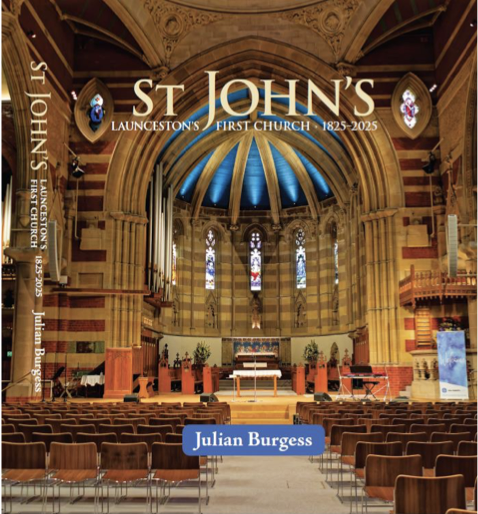
The story of the church is told in a new book, St John’s – Launceston’s First Church 1825-2025, launched on 29 April 2025. The book is part of bicentenary celebrations for the church.

The St John’s Church story starts with courageous Reverend John Youl who was the first ordained minister in northern Van Diemen’s Land. He arrived in 1819 and oversaw the construction of the first iteration of St John’s.

The foundation stone was laid by newly arrived Lieutenant-Governor George Arthur on 28 December 1824. Construction began in early 1825.

The first funeral service in the church was held on Wednesday 24 August 1825, before the building had even been completed.

Charlotte Balfour, the 33-year-old wife of Launceston Commandant William Balfour, died in childbirth and was interred inside the walls of the unfinished church.

Her resting place, marked by a plaque on the original southern wall, remained largely forgotten until major building works in 1911.

It was uncovered again in 1938 when a new floor was installed and again last year when electrical work was undertaken. Charlotte Balfour was the first and only person buried at St John’s Church.

The first Divine Service was held in St John’s on Friday 16 December 1825.

In 1829 a clock was installed in St John’s Church tower which became Launceston’s first town clock. The clock in St John’s tower served in that role for more than 80 years. In 1837 the first stained-glass window was installed, believed to be the first in a church in Tasmania.

In 1846 the Launceston Church Grammar School opened next door, with St John’s used for regular school chapel services. The Grammar School is said to be Australia’s oldest continuously operating school.

When St John’s second rector Revd Dr William Browne retired in 1868, after 40 years in the role, he said his Parish Register recorded that during his Ministry he had performed 1,834 marriages, 4,153 baptisms and 2,231 burials.

In 1893 the church leased the former Queens Head Hotel in Wellington Street and converted it into the first St John’s Mission House.

It offered support and accommodation for Launceston’s poor and homeless under the caring management of Sister Charlotte Shoobridge who was ordained as Tasmania’s first deaconess by Bishop Henry Montgomery in St John’s Church on Saturday, 13 October 1894,

In 1902, Bishop Mercer said that should the Diocese of Tasmania ever be divided, St John’s, as the Mother Church of the North, would naturally become a cathedral.

In 1912, following the completion of a major extension of the church, St John’s was being referred to as “the Cathedral of the North”.

The church was full when St John’s held its first Anzac Day service on Tuesday 25 April 1916. There was a congregation of more that 1,000 for the National Day of Prayer in St John’s on Sunday 26 May 1940 calling for peace in Europe. The Governor, Sir Ernest Clark, was in attendance.

The church was again full for the special service on Tuesday 2 June 1953 to mark the coronation of Queen Elizabeth II.

In 1955 parish records noted 117 marriages and 195 baptisms in St John’s. It was said that more marriages were solemnised at St John’s than any other church in Launceston and the same could be said for baptisms.

In 1997 former Prime Minister Gough Whitlam delivered the eulogy at the funeral of his former deputy Lance Barnard, the long-serving Federal Member for Bass.

The Brindley organ in St John’s, first installed in 1862, has been described as the finest in the nation. In 2007, the long-held goal to complete the rebuilding of the organ, as designed by organist George Hopkins in the early 1900s, was completed.

For 200 years St John’s Church has been a place of worship for generations of northern Tasmanians and a place of celebration, mourning and contemplation for many others.

Its imposing presence on the edge of the business district has aways been a reassuring and comforting sight for Launcestonians, both parishioners and other citizens.

St John’s Church has only had 20 rectors since 1825. The incumbent in 2025 is The Venerable James W. Hornby, B.ForestSc, M.Div.

(St John’s – Launceston’s First Church 1825-2025 was written by Julian Burgess and produced by Forty South Publishing for the All Saints Network as part of the parish’s bicentenary celebrations during 2025. The book is available from St John’s Church office, 157 St John’s Street, Launceston, Tasmania, Phone (03) 6331 4896.)
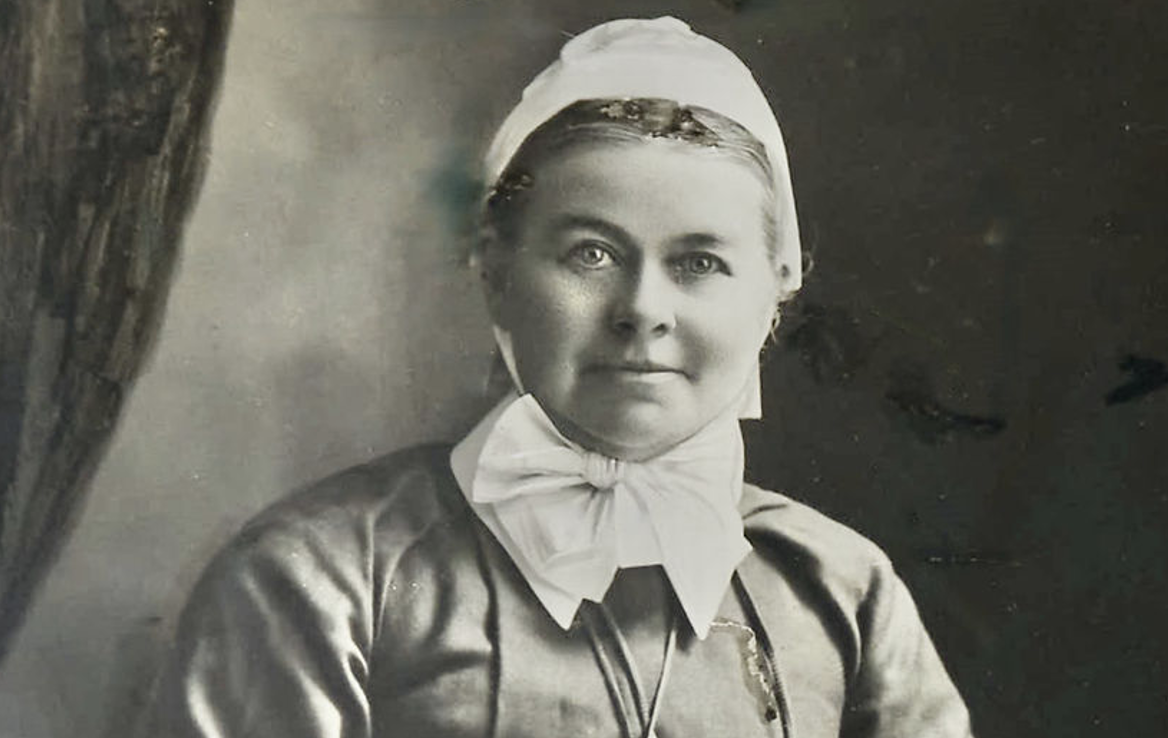
Charlotte Shoobridge, Tasmania’s first Deaconess

Charlotte Jessy Shoobridge was ordained as Tasmania’s first deaconess by Bishop Henry Montgomery in St John’s Church, Launceston, on Saturday, 13 October 1894.

There had traditionally been strong opposition to the appointment of women to positions within the Anglican Church but the Bishop and other senior ministers saw the need for change.

With the support of St John’s rector Rev. Nugent Kelly and church-warden Ernest Whitfeld, Miss Shoobridge had been appointed in 1893 to run the St John’s Mission House.

Her job was to oversee the provision of support, accommodation and religious guidance for the growing number of poor and distressed people in the parish.

The job came with no pay and no security of tenure but Miss Shoobridge, who was 50 at the time, held the position for nearly 20 years. She was widely known as Sister Charlotte.

Born in 1843, she was the eldest daughter of hop grower and politician Ebenezer Shoobridge and his wife Charlotte, of Bushy Park in the Derwent Valley.

She trained in parish work in Melbourne before applying to join St John’s Church.

Church-warden Ernest Whitfeld told a meeting of the St John’s congregation in 1882 that Miss Shoobridge had written to him asking to come and work in Launceston.

He said it was a “most unexpected offer” but there were many things she could do in Launceston in “nursing sick women and children and visiting cases where other women would be afraid to go, and would scarcely be so effective.”

Ernest Whitfeld was enthusiastic about the church being active in “home mission” work and early in 1893 he had arranged for the lease of the former Queen’s Head Hotel in Wellington Street for £1 a week.

The old hotel was converted into St John’s Mission House with the bar turned into a free reading room and the old skittle alley becoming a meeting room. Another area was turned into a chapel.

The dining room was used for educational purposes with singing classes held for boys and girls and sewing classes for girls held twice a week.

Upstairs there were bedrooms for those who required sympathetic care and a temporary home. One room was made available to the Benevolent Society.

At Deaconess Shoobridge’s ordination Bishop Montgomery preached a sermon on the subject of women’s ministrations and he gave many instances of the good resulting from the “labours undertaken and nobly carried out by sisters of the church.”

Among the congregation were a number of the people who had benefited from the care of the St John’s Mission House.

By the early 1900s the converted hotel had become inadequate and in 1905 a new St John’s Mission House was built at 103 Canning Street.

It was officially opened and dedicated in March 1906 and Sister Charlotte was in charge of the new, larger mission house until her retirement in 1910.

The building served as St John’s Mission House until 1947 when it was sold to the State Government. In recent times it became a backpacker hostel.St John’s Church, which was Launceston’s first church, will celebrate its bicentenary next year.

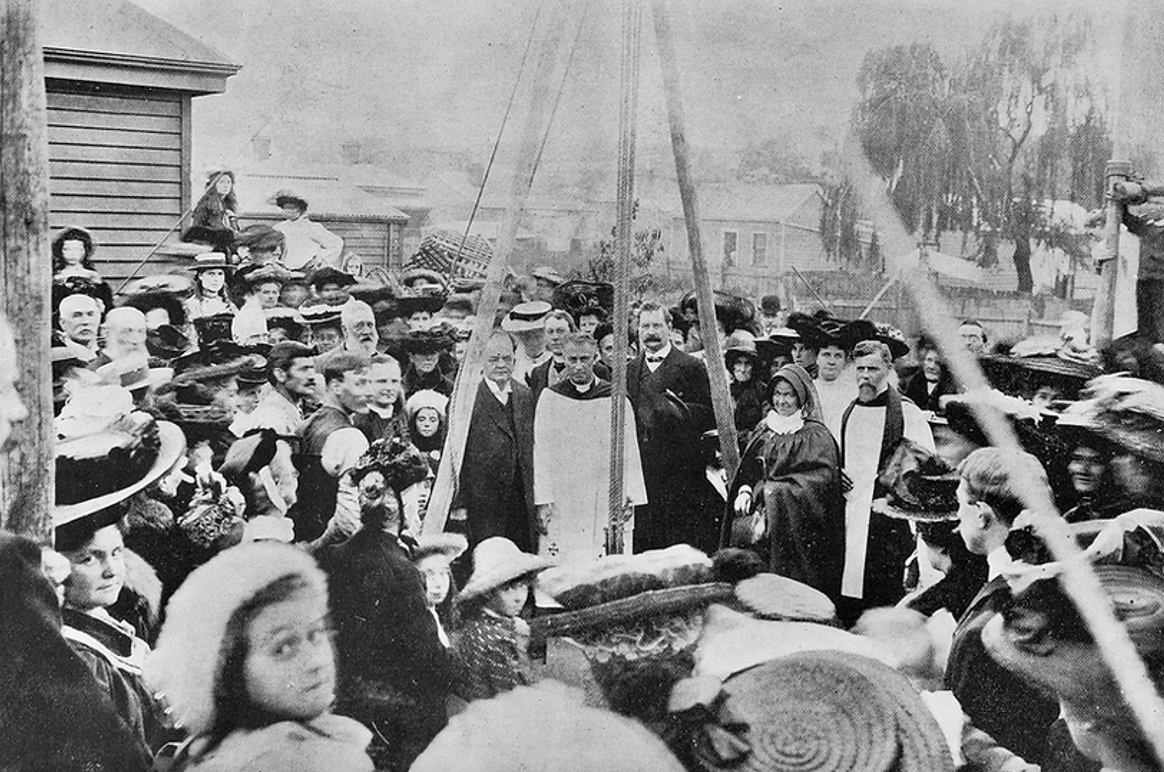
Images — TOP: Deaconess Charlotte Shoobridge photograph from about 1895. All Saints Network picture. BOTTOM: Laying the foundation stone for the new St John’s Mission House, Canning Street, Launceston. Sister Charlotte is pictured with the mayor J. W. Pepper and other guests. Weekly Courier, 3 May 1905.

Originally written for the Launceston Historical Society and published in The Sunday Examiner, 29 April 2024.

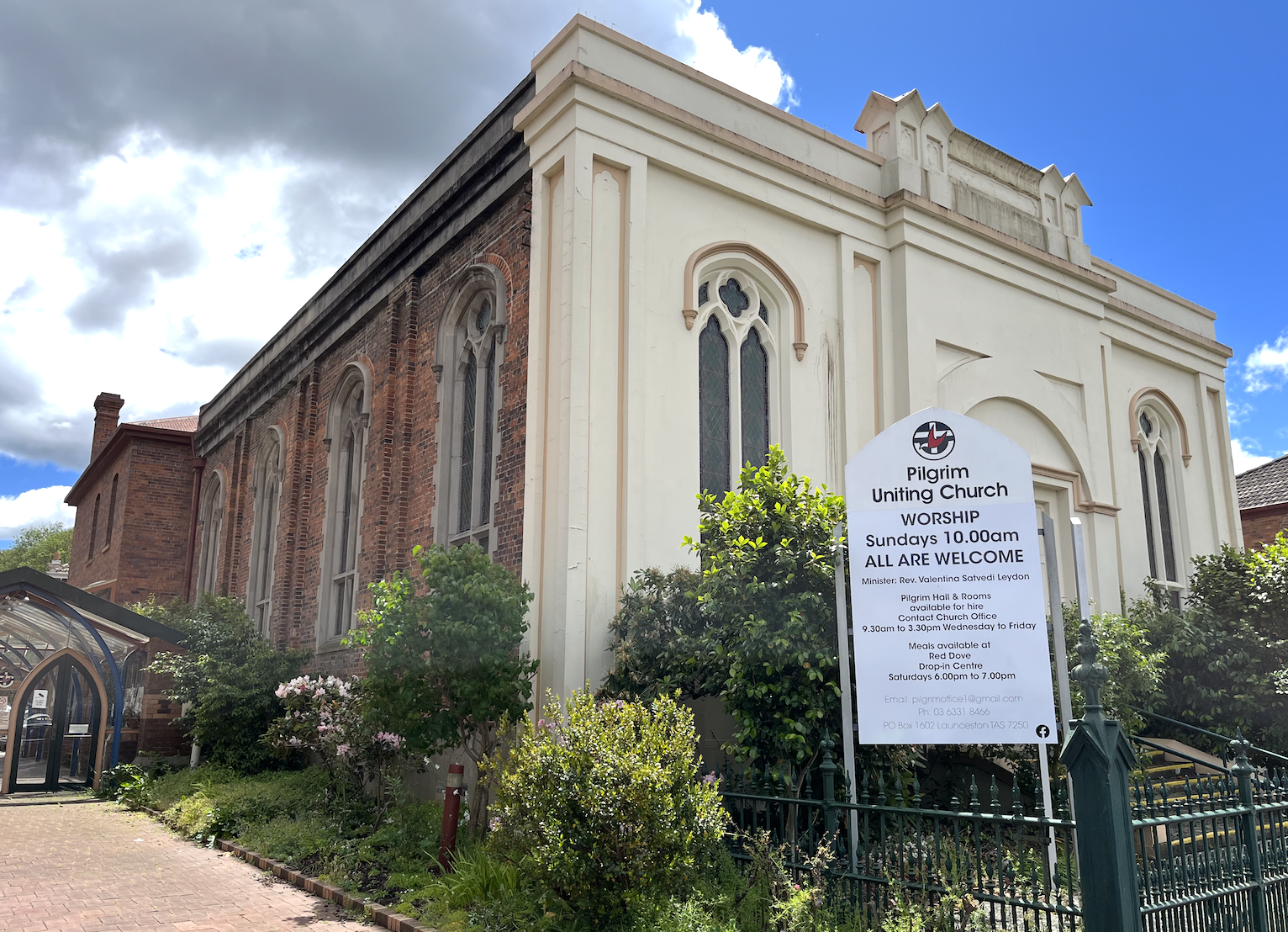
The historic Wesleyan Chapel in Paterson Street

Launceston’s second church, near the corner of Cameron and George streets, held its first service on Sunday 4 March 1827, in a chapel built by the Wesleyan Missionary Society.

The Wesleyans were only a little over a year behind the Church of England in erecting a place of worship in Launceston with St John’s Church holding its first Devine Service on 16 December 1825.

That first Wesleyan chapel no longer exists but its successor in Paterson Street, now known as Pilgrim Hall, was completed in 1835 and has survived for 188 years. It was recently announced the building was to be sold.

The Tasmanian and Port Dalrymple Advertiser, on Wednesday 6 April 1825,reported that the Wesleyan Missionary Rev. John Hutchinson had just arrived in Launceston from Sydney to minister to the free and convict residents of Port Dalrymple.

The only other minister in northern Van Diemen’s Land at the time was Church of England chaplain John Youl who had begun his ministry in 1819.

As the church of the British Empire, the Church of England had all its costs covered by the colonial government that initially declined to provide similar support to other denominations.

In 1825, Launceston had a population of about 1,200, half or whom were convicts, and Rev. Youl was overseeing the construction of Launceston’s first proper church, St John’s.

Rev. Hutchinson conducted his first service two weeks after his arrival in a house in Cameron Street, opposite John Fawkner’s Cornwall House (later the Cornwall Hotel).

By February 1826, shortly after the first Church of England service was held in St John’s, it was reported that between £200 and £300 had been pledged by Launceston residents for the construction of a Wesleyan chapel in the town.

Rev. Hutchinson however was ordered to leave Launceston and in March 1826 he departed for the Polynesian kingdom of Tonga to undertake missionary work.

His removal slowed work on the chapel and in July 1826 the treasurer of the building committee, brewer William Barnes, requested residents to pay the money they had pledged “for the erection of this place for public worship” as funds had been “entirely exhausted.”

It wasn’t until Sunday 4 March 1827 that a lay preacher officiated at the first Divine Service in the new Wesleyan chapel near the corner of Cameron and George streets (near where the Anglican Holy Trinity Church now stands).

A new minister for the chapel could not be found and there was outrage when it was learnt in 1829 that the Wesleyans were planning to sell their Launceston chapel. Despite the protests the government bought the property and the chapel became a school and the parsonage was turned into a government store.

The proceeds of the sale were held by John Fawkner who later passed the money on to the Scotch National Church for the erection of their first church in Charles Street in 1831.

Rev. John Manton, a Wesleyan missionary who had been ministering at the Macquarie Harbour and Port Arthur convict stations since 1831, was ordered to Launceston in 1834 and the following year Lieutenant-Governor George Arthur granted land in Paterson Street for a new chapel.

The foundation stone was laid on 20 April 1835, and the Launceston Advertiser reported that the site for the chapel was on open space fronting on Paterson Street.

“The builders are to be Messrs Weir and Ferguson, of this Town, whose tender was accepted by the Committee. The plan, drawn by Mr S. Jackson, we have before noticed, as of one of the prettiest buildings we have known designed in Van Diemen’s Land.”

On Christmas Day 1835 (a Friday), Rev. Manton preached at the first Divine Service in the chapel and in 1839 a parsonage was built next door.

With a growing congregation more land was obtained to the west of the chapel and the foundation stone for the more imposing Paterson Street Methodist Church was laid on 18 September 1866.  The church was opened for services on 21 February 1868.