Launceston’s first church, a story of faith, hope and survival

St John’s Church is an important part of Launceston’s history. In 1824 the northern headquarters of Van Diemen’s Land was relocated from George Town to the head of the Tamar River. In the same year the foundation stone was laid for St John’s Church in Launceston.

In 1825 construction of St John’s Church was completed and the first divine service held. St John’s Church is the oldest public building in the city of Launceston and the oldest surviving Anglican church in Tasmania.

The church has reflected the progress of Launceston over 200 years and there are numerous remarkable events and firsts in the story of St John’s.

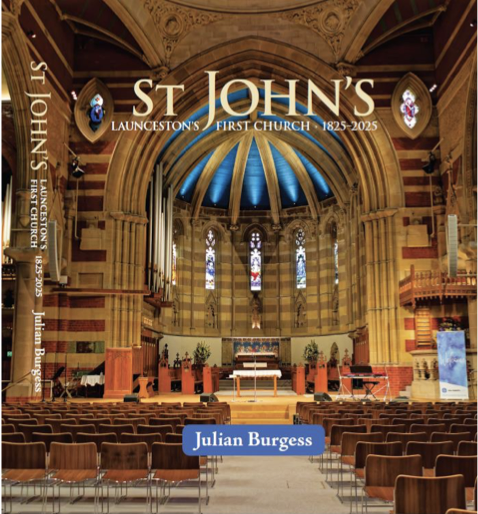
The story of the church is told in a new book, St John’s – Launceston’s First Church 1825-2025, launched on 29 April 2025. The book is part of bicentenary celebrations for the church.

The St John’s Church story starts with courageous Reverend John Youl who was the first ordained minister in northern Van Diemen’s Land. He arrived in 1819 and oversaw the construction of the first iteration of St John’s.

The foundation stone was laid by newly arrived Lieutenant-Governor George Arthur on 28 December 1824. Construction began in early 1825.

The first funeral service in the church was held on Wednesday 24 August 1825, before the building had even been completed.

Charlotte Balfour, the 33-year-old wife of Launceston Commandant William Balfour, died in childbirth and was interred inside the walls of the unfinished church.

Her resting place, marked by a plaque on the original southern wall, remained largely forgotten until major building works in 1911.

It was uncovered again in 1938 when a new floor was installed and again last year when electrical work was undertaken. Charlotte Balfour was the first and only person buried at St John’s Church.

The first Divine Service was held in St John’s on Friday 16 December 1825.

In 1829 a clock was installed in St John’s Church tower which became Launceston’s first town clock. The clock in St John’s tower served in that role for more than 80 years. In 1837 the first stained-glass window was installed, believed to be the first in a church in Tasmania.

In 1846 the Launceston Church Grammar School opened next door, with St John’s used for regular school chapel services. The Grammar School is said to be Australia’s oldest continuously operating school.

When St John’s second rector Revd Dr William Browne retired in 1868, after 40 years in the role, he said his Parish Register recorded that during his Ministry he had performed 1,834 marriages, 4,153 baptisms and 2,231 burials.

In 1893 the church leased the former Queens Head Hotel in Wellington Street and converted it into the first St John’s Mission House.

It offered support and accommodation for Launceston’s poor and homeless under the caring management of Sister Charlotte Shoobridge who was ordained as Tasmania’s first deaconess by Bishop Henry Montgomery in St John’s Church on Saturday, 13 October 1894,

In 1902, Bishop Mercer said that should the Diocese of Tasmania ever be divided, St John’s, as the Mother Church of the North, would naturally become a cathedral.

In 1912, following the completion of a major extension of the church, St John’s was being referred to as “the Cathedral of the North”.

The church was full when St John’s held its first Anzac Day service on Tuesday 25 April 1916. There was a congregation of more that 1,000 for the National Day of Prayer in St John’s on Sunday 26 May 1940 calling for peace in Europe. The Governor, Sir Ernest Clark, was in attendance.

The church was again full for the special service on Tuesday 2 June 1953 to mark the coronation of Queen Elizabeth II.

In 1955 parish records noted 117 marriages and 195 baptisms in St John’s. It was said that more marriages were solemnised at St John’s than any other church in Launceston and the same could be said for baptisms.

In 1997 former Prime Minister Gough Whitlam delivered the eulogy at the funeral of his former deputy Lance Barnard, the long-serving Federal Member for Bass.

The Brindley organ in St John’s, first installed in 1862, has been described as the finest in the nation. In 2007, the long-held goal to complete the rebuilding of the organ, as designed by organist George Hopkins in the early 1900s, was completed.

For 200 years St John’s Church has been a place of worship for generations of northern Tasmanians and a place of celebration, mourning and contemplation for many others.

Its imposing presence on the edge of the business district has aways been a reassuring and comforting sight for Launcestonians, both parishioners and other citizens.

St John’s Church has only had 20 rectors since 1825. The incumbent in 2025 is The Venerable James W. Hornby, B.ForestSc, M.Div.

(St John’s – Launceston’s First Church 1825-2025 was written by Julian Burgess and produced by Forty South Publishing for the All Saints Network as part of the parish’s bicentenary celebrations during 2025. The book is available from St John’s Church office, 157 St John’s Street, Launceston, Tasmania, Phone (03) 6331 4896.)
The importance of Milton Hall in Launceston’s history

Milton Hall, sold in 2022 by the Baptist Union of Tasmania, is a hugely important place in the history of Launceston.

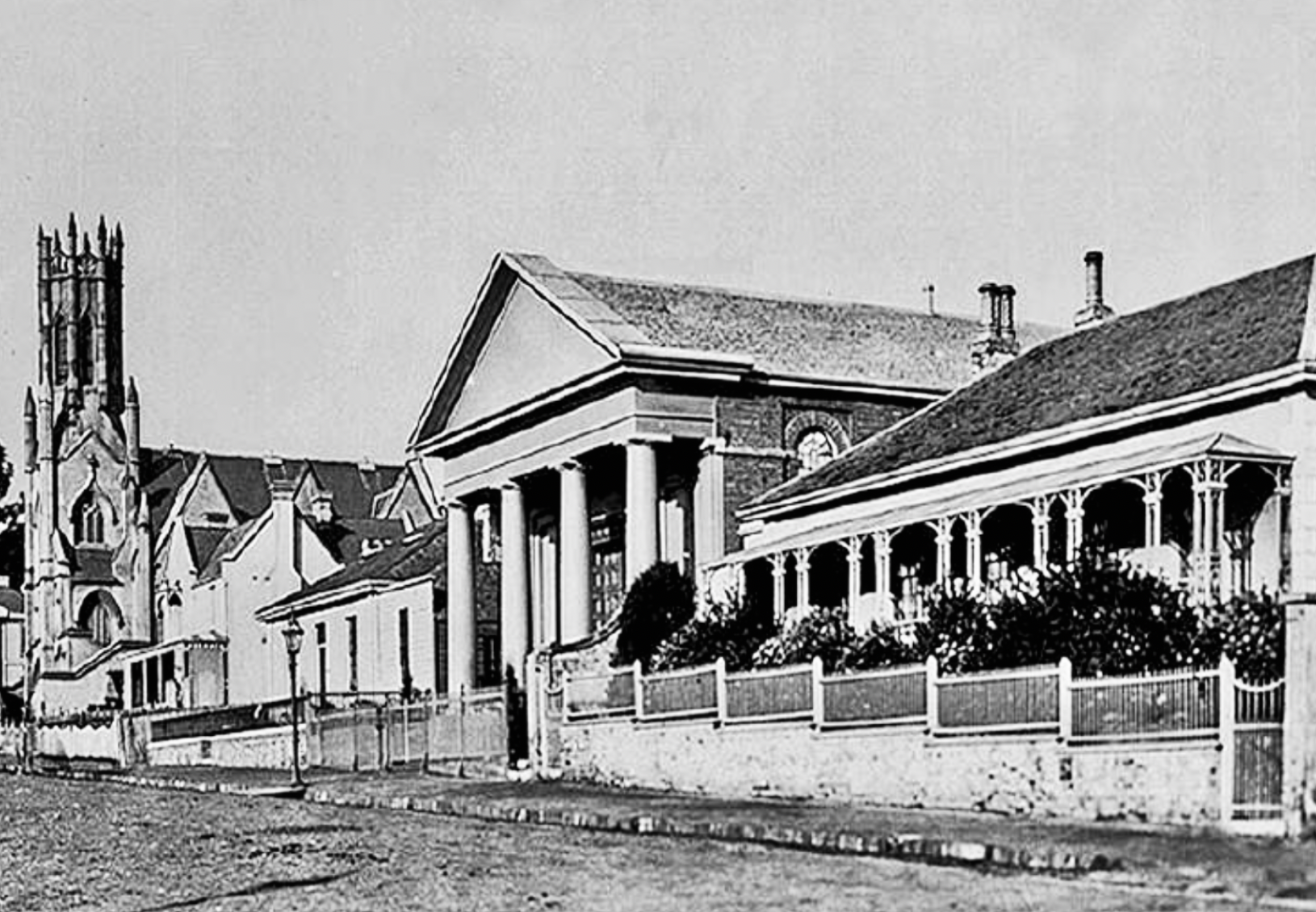
It was built in 1842 and paid for by supporters of the Independent pastor Rev. John West as the St John Square Congregational Chapel.

John West biographer Patricia Ratcliff wrote that he was “arguably the most influential of the middle class dissenters, a person of colossal intellect, a dynamic orator with a mellifluous voice.”

The Rev. West arrived in Launceston in 1839 and initially held services in an infant schoolroom in Frederick St, between Wellington and Charles streets.

By 1841 his congregation had grown so much that a proper church was needed.

A block of land was bought further up Frederick Street and money was pledged to erect a new chapel. The prominent Baptist minister Henry Dowling laid the foundation stone on Thursday, September 2, 1841.

It took builder George Gould nearly a year to complete the Doric Temple style chapel with the dedication service held on Friday, August 12, 1842.

The first services were held on the following Sunday with sermons by Rev. Dowling, Rev. Joseph Beazley, of the Kempton Congregational Church, and Rev. William Garrett, of the Presbyterian Church.

John West and members of his congregation established a number of important community and charitable institutions in Launceston.

They include the Mechanics’ Institute (predecessor to the Launceston Library and the Queen Victoria Museum and Art Gallery), the City Mission and a general cemetery.

He also supported the establishment of business organisations like the Cornwall Insurance Company and The Examiner newspaper.

John West wrote the leading article in the first edition of The Examiner attacking convict transportation and its detrimental effect on building a respectable, sound and prosperous society.

From 1842 to 1854 his editorials championed social reforms.

In 1849 John West designed a flag for the Anti-Transportation League that was unveiled at a national meeting in Melbourne. It is considered to be the model of the Australian flag

He published his History of Tasmania, printed at The Examiner, in 1852 and it is still widely quoted and considered an important source of information on Tasmania’s first 50 years.

His series of essays entitled Union of the Colonies, written in Launceston in 1854, outlined his vision for the federation of the Australian colonies.

Convict transportation to Tasmania had ended when John West resigned as pastor of the St John’s Square Chapel in 1854 to accept the position of editor of the Sydney Morning Herald.

He died in 1877 and it is quite remarkable that so many of the institutions he helped establish continue to benefit Launceston.

Image — TOP: Frederick Street in 1866 shows Chalmers Church, John West’s Congregational Chapel (Milton Hall) and schoolhouse. Picture courtesy State Library of Victoria.

Miss Flinders: a pioneering plane

In March 1932 the first regular air passenger service between Tasmania and Flinders Island was introduced by pilot and flying instructor L. M. (Laurie) Johnson.

His Desoutter II single-engined monoplane, given the name Miss Flinders, had been flown out from England between December 1931 and February 1932.

The plane, which could only carry two passengers, had a cruising speed of 140 to 160 kilometres an hour and the trip to Whitemark from Western Junction took about an hour.

Laurie Johnson had been the Tasmanian manager of Essendon-based Matthews Aviation who in 1930 had started a short-lived air service between Melbourne and Tasmania.

The Flinders Island service ran on Tuesdays and Fridays and on other days he offered joy flights from Western Junction and other airstrips.

In the first three months of operation Laurie Johnson’s Flinders Island Airways made 56 return flights to Whitemark carrying a total of 85 passengers as well as mail and freight.

Victor Holyman, who had been a World War I fighter pilot and was a ships captain in his family’s shipping company, watched the progress of the new air service closely.

Holymans, based in Launceston, operated numerous vessels across Bass Strait, including services to Flinders Island.

In September 1932 Holymans took delivery of a new de Havilland Fox Moth bi-plane to also service Flinders Island. The Fox Moth could carry four passengers at a maximum speed of 170 kph.

The Holymans called their plane Miss Currie.

Within weeks Laurie Johnson had agreed to merge with Holymans in a new company called Tasmanian Aerial Services.

The merger enabled the fledgling airline to expand its services along the Tasmanian coast to Latrobe, Wynyard, Smithton and King Island.

The success of these new services encouraged the airline to buy two eight-seater de Havilland biplanes they named Miss Launceston and Miss Hobart.

A service to Melbourne was introduced with the main pilots being Laurie Johnson and Victor Holyman. Tragically, in 1934 Victor Holyman and his passengers in Miss Hobart disappeared near Wilsons Promontory.

In 1935 Miss Flinders was sold back to de Havilland.

Laurie Johnson continued flying with Tasmanian Aerial Services which under Holymans management would grow into Australian National Airways, the biggest airline in Australia in the 1940s.

In later life Miss Flinders returned to Launceston, being on display at Launceston Airport, then a major exhibit at the Queen Victoria Museum at Inveresk, and finally back to Launceston Airport.

Launcestons disappearing industrial heritage

Only one of the three factories at Mowbray designed by renowned Melbourne industrial architect Graeme Lumsden in the late 1940s is still standing.

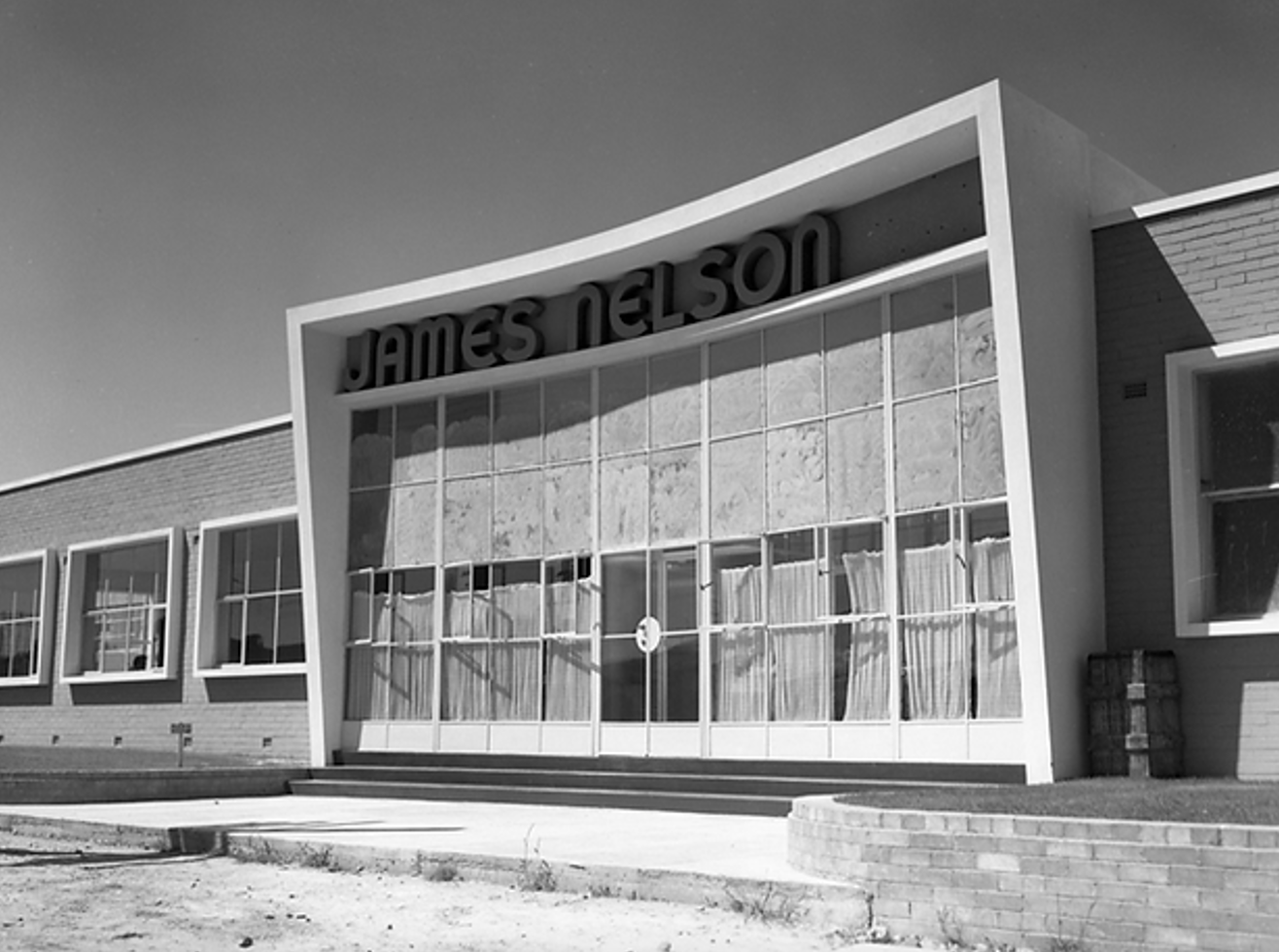
It was a period when port-war prosperity allowed more aesthetic industrial buildings and the most distinctive of Mr Lumsden’s Tasmanian commissions, the James Nelson factory, was described in the Launceston Heritage Study of 2006 as an early example of an “international style” industrial building.

According to the website of Victorian architectural historians Built Heritage Pty Ltd, the Replacement Parts (later Repco and now ACL) factory at 310 Invermay Road, was designed in 1947 when Mr Lumsden was in partnership with leading Melbourne architect Arthur Purnell.

After setting up his own architectural practice in 1948, Mr Lumsden designed factories for Modern Transport and Metal Industries (MTM Industries), at 316 Invermay Road, Mowbray, and the electrical fittings maker CGC Manufacturing Company in Howard Street, Invermay.

The James Nelson factory, at 298-308 Invermay Road, was designed in 1949 and the following year he designed a textile factory at Devonport for the Tootal Broadhurst Lee Company Ltd.

His Tasmanian work led to numerous major commissions in Victoria. Both the MTM factory and the James Nelson factory have only recently been demolished.

Graeme Lumsden’s obituary in the Melbourne Age on 17 August 1995, said he was one of Australia’s most successful industrial architects and factories he designed in Victoria included projects for Leyland Motors, Volkswagen Australia, Peters Ice Cream, Specialty Press, Repco, Glaxo and Bowater Paper.

Of his Tasmanian projects the James Nelson factory was perhaps his most noteworthy.

James Nelson Ltd, of Valley Mills, in Nelson, Lancashire, was the last of the British companies to build textile factories in Launceston. The Patons and Baldwins knitting yarn mill at Glen Dhu, and Kelsall and Kemp, at Invermay, which produced flannel, had both commenced production in 1923.

James Nelson had been founded in 1884 and by the 1900s was a huge operation employing thousands of people. By the 1950s it was the only company in the world spinning its own cotton and making its own viscose rayon and acetate rayon.

It formed its Australian subsidiary in 1949 and its factory in Launceston was its first outside the UK.

The James Nelson factory in Mowbray was built by Launceston firm H. J. Martin and like the other British textile companies that set up in Launceston, they brought out equipment and workers from the UK.

Production in Launceston commenced in August 1951 using imported rayon yarn to produce fabric that went to the makers of dresses, blouses, underwear and linings and materials used as a replacement for silk.

By the late 1960s more than 200 people worked at James Nelson and curtain, upholstery and other fabrics were being produced.

However, the 25 per cent reduction in tariffs on imported textiles in the 1970s devastated the Australian industry and led to the demise of Kelsall and Kemp and Patons and Baldwins. Production at James Nelson ceased in 2014 with the machinery sold off.

The Launceston Heritage Study says the well-designed James Nelson façade is attached to a more traditional factory building but is a very good example of modern post-war industrial design.

Images — TOP: The now demolished James Nelson facade photographed in December 1951. Picture: Libraries Tasmania AB713/1/250.

Written for the Launceston Historical Society and published in The Sunday Examiner, 27 August 2024.