Only one of the three factories at Mowbray designed by renowned Melbourne industrial architect Graeme Lumsden in the late 1940s is still standing.
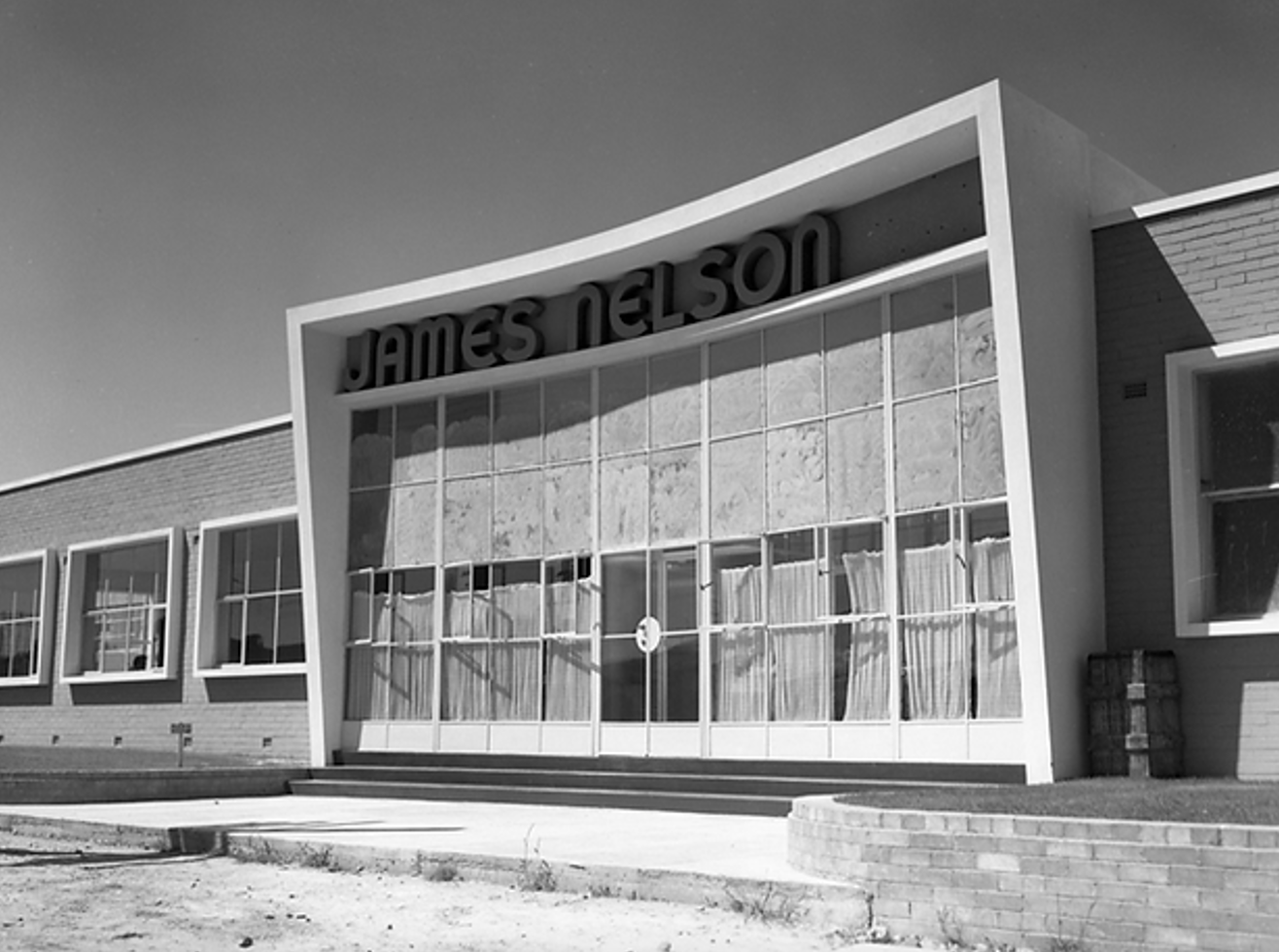
It was a period when port-war prosperity allowed more aesthetic industrial buildings and the most distinctive of Mr Lumsden’s Tasmanian commissions, the James Nelson factory, was described in the Launceston Heritage Study of 2006 as an early example of an “international style” industrial building.
According to the website of Victorian architectural historians Built Heritage Pty Ltd, the Replacement Parts (later Repco and now ACL) factory at 310 Invermay Road, was designed in 1947 when Mr Lumsden was in partnership with leading Melbourne architect Arthur Purnell.
After setting up his own architectural practice in 1948, Mr Lumsden designed factories for Modern Transport and Metal Industries (MTM Industries), at 316 Invermay Road, Mowbray, and the electrical fittings maker CGC Manufacturing Company in Howard Street, Invermay.
The James Nelson factory, at 298-308 Invermay Road, was designed in 1949 and the following year he designed a textile factory at Devonport for the Tootal Broadhurst Lee Company Ltd.
His Tasmanian work led to numerous major commissions in Victoria. Both the MTM factory and the James Nelson factory have only recently been demolished.
Graeme Lumsden’s obituary in the Melbourne Age on 17 August 1995, said he was one of Australia’s most successful industrial architects and factories he designed in Victoria included projects for Leyland Motors, Volkswagen Australia, Peters Ice Cream, Specialty Press, Repco, Glaxo and Bowater Paper.
Of his Tasmanian projects the James Nelson factory was perhaps his most noteworthy.
James Nelson Ltd, of Valley Mills, in Nelson, Lancashire, was the last of the British companies to build textile factories in Launceston. The Patons and Baldwins knitting yarn mill at Glen Dhu, and Kelsall and Kemp, at Invermay, which produced flannel, had both commenced production in 1923.
James Nelson had been founded in 1884 and by the 1900s was a huge operation employing thousands of people. By the 1950s it was the only company in the world spinning its own cotton and making its own viscose rayon and acetate rayon.
It formed its Australian subsidiary in 1949 and its factory in Launceston was its first outside the UK.
The James Nelson factory in Mowbray was built by Launceston firm H. J. Martin and like the other British textile companies that set up in Launceston, they brought out equipment and workers from the UK.
Production in Launceston commenced in August 1951 using imported rayon yarn to produce fabric that went to the makers of dresses, blouses, underwear and linings and materials used as a replacement for silk.
By the late 1960s more than 200 people worked at James Nelson and curtain, upholstery and other fabrics were being produced.
However, the 25 per cent reduction in tariffs on imported textiles in the 1970s devastated the Australian industry and led to the demise of Kelsall and Kemp and Patons and Baldwins. Production at James Nelson ceased in 2014 with the machinery sold off.
The Launceston Heritage Study says the well-designed James Nelson façade is attached to a more traditional factory building but is a very good example of modern post-war industrial design.
Images — TOP: The now demolished James Nelson facade photographed in December 1951. Picture: Libraries Tasmania AB713/1/250.
Written for the Launceston Historical Society and published in The Sunday Examiner, 27 August 2024.
 julianburgess.com.au