65 years since the Pot sailed in

When the new Bass Strait ferry Princess of Tasmania came into service on September 23, 1959, it was the first roll-on, roll-off passenger ship in the southern hemisphere.

Known affectionately as “the Pot,” the Princess of Tasmania plied between Melbourne and Devonport for 13 years and was promoted as a “searoad” that made it easy for motorists to drive between the mainland and Tasmania.

The Princess of Tasmania was built specifically for the Bass Strait service by the federal government-owned Australian National Line at the New South Wales State Dockyards in Newcastle.

It could carry 334 passengers and 142 cars and there was cabin accommodation as well as 140 lounge chairs where passengers could spend the 14-hour voyage. It made three return trips across Bass Strait a week.

With its stern-opening vehicle ramp allowing cars and trucks to drive into its hold, the Princess of Tasmania was part of a revolution in ship loading.

Passengers on its maiden voyage comprised mostly VIPs and politicians, including Premier Eric Reece and his wife Alice, as well as media representatives.

The Examiner sent reporter (and later editor) Michael Courtney and in his report he noted that on a cold night there were only about 100 people to see the ferry off in Melbourne.

However, when the Princess of Tasmania arrived in Devonport more than 8000 people lined the banks of the Mersey River to watch the ship arrive at its newly constructed roll-on, roll-off berth.

The Examiner described the ferry’s arrival in Devonport as “majestic”.

“When the Princess of Tasmania berthed at her terminal yesterday she completed a voyage which has evoked public interest and enthusiasm such as has not been seen before in Australian coastal shipping services.”

“Her appearance and appointments have impressed all who have seen her.”

The chairman of the Australian Coastal Shipping Commission, Captain J. P. Williams, told The Examiner that Tasmania was getting a shipping service as modern as any in the world.

Like its predecessor, the Empress of Australia operated on the Melbourne-Devonport run for 13 years before ownership of the service passed to the Tasmanian government and a new ship, the 10-year-old German-built Abel Tasman, was bought.

The Princess of Tasmania made nearly 2000 crossings of Bass Strait before being taken off the run in June 1972. It was replaced by another ANL-build roll-on, roll-off passenger ferry, the Empress of Australia, which had been built in 1964 for the Sydney to Devonport service.

The Abel Tasman was in turn replaced by another European-built ferry, the first Spirit of Tasmania, in 1994. The two current Spirit of Tasmania ferries, also built in Europe, commenced service in 2002.

Tasmania’s Bass Strait passenger ferries have been getting progressively bigger and more expensive since the Princess of Tasmania which was 113 metres long and cost weighed £2.5 million.

The two new Spirit of Tasmania ships, being built in Finland and due here soon, are nearly twice the size at 212 metres, are considerably faster and will cost close to $1 billion.

Image — TOP: The Princess of Tasmania in the Mersey River. ANL publicity photo, photographer unknown.

Written for the Launceston Historical Society and published in The Sunday Examiner, 29 September 2024.
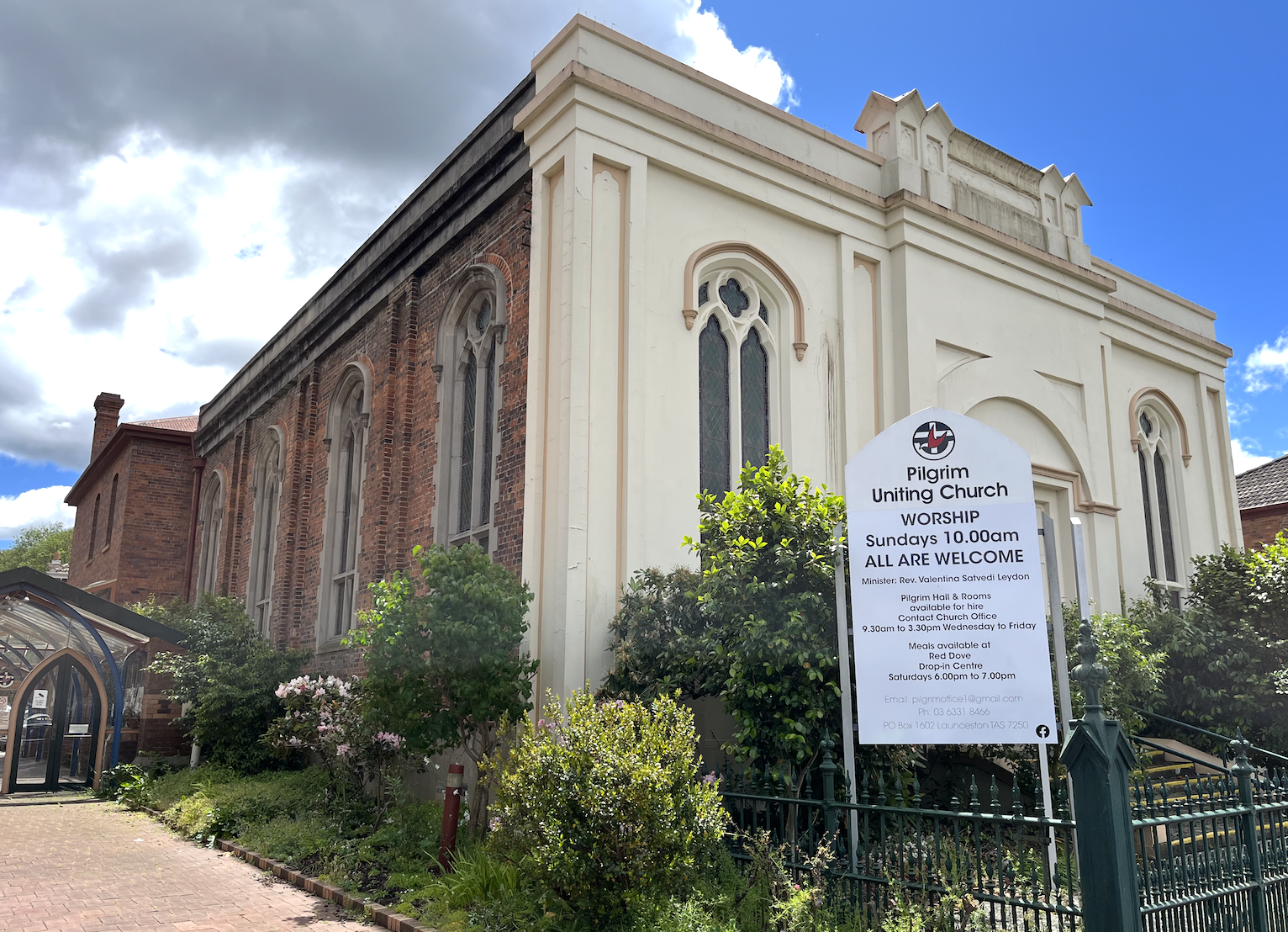
The historic Wesleyan Chapel in Paterson Street

Launceston’s second church, near the corner of Cameron and George streets, held its first service on Sunday 4 March 1827, in a chapel built by the Wesleyan Missionary Society.

The Wesleyans were only a little over a year behind the Church of England in erecting a place of worship in Launceston with St John’s Church holding its first Devine Service on 16 December 1825.

That first Wesleyan chapel no longer exists but its successor in Paterson Street, now known as Pilgrim Hall, was completed in 1835 and has survived for 188 years. It was recently announced the building was to be sold.

The Tasmanian and Port Dalrymple Advertiser, on Wednesday 6 April 1825,reported that the Wesleyan Missionary Rev. John Hutchinson had just arrived in Launceston from Sydney to minister to the free and convict residents of Port Dalrymple.

The only other minister in northern Van Diemen’s Land at the time was Church of England chaplain John Youl who had begun his ministry in 1819.

As the church of the British Empire, the Church of England had all its costs covered by the colonial government that initially declined to provide similar support to other denominations.

In 1825, Launceston had a population of about 1,200, half or whom were convicts, and Rev. Youl was overseeing the construction of Launceston’s first proper church, St John’s.

Rev. Hutchinson conducted his first service two weeks after his arrival in a house in Cameron Street, opposite John Fawkner’s Cornwall House (later the Cornwall Hotel).

By February 1826, shortly after the first Church of England service was held in St John’s, it was reported that between £200 and £300 had been pledged by Launceston residents for the construction of a Wesleyan chapel in the town.

Rev. Hutchinson however was ordered to leave Launceston and in March 1826 he departed for the Polynesian kingdom of Tonga to undertake missionary work.

His removal slowed work on the chapel and in July 1826 the treasurer of the building committee, brewer William Barnes, requested residents to pay the money they had pledged “for the erection of this place for public worship” as funds had been “entirely exhausted.”

It wasn’t until Sunday 4 March 1827 that a lay preacher officiated at the first Divine Service in the new Wesleyan chapel near the corner of Cameron and George streets (near where the Anglican Holy Trinity Church now stands).

A new minister for the chapel could not be found and there was outrage when it was learnt in 1829 that the Wesleyans were planning to sell their Launceston chapel. Despite the protests the government bought the property and the chapel became a school and the parsonage was turned into a government store.

The proceeds of the sale were held by John Fawkner who later passed the money on to the Scotch National Church for the erection of their first church in Charles Street in 1831.

Rev. John Manton, a Wesleyan missionary who had been ministering at the Macquarie Harbour and Port Arthur convict stations since 1831, was ordered to Launceston in 1834 and the following year Lieutenant-Governor George Arthur granted land in Paterson Street for a new chapel.

The foundation stone was laid on 20 April 1835, and the Launceston Advertiser reported that the site for the chapel was on open space fronting on Paterson Street.

“The builders are to be Messrs Weir and Ferguson, of this Town, whose tender was accepted by the Committee. The plan, drawn by Mr S. Jackson, we have before noticed, as of one of the prettiest buildings we have known designed in Van Diemen’s Land.”

On Christmas Day 1835 (a Friday), Rev. Manton preached at the first Divine Service in the chapel and in 1839 a parsonage was built next door.

With a growing congregation more land was obtained to the west of the chapel and the foundation stone for the more imposing Paterson Street Methodist Church was laid on 18 September 1866.  The church was opened for services on 21 February 1868.

Benevolent Society’s home for the less fortunate

In January 1895 the Launceston Benevolent Society offered to take over management of the Invalid Depot in Paterson Street which was home to about 150 destitute and aged men and women.

By the 1890s it was home to a wider community of aged men and women and when the Examiner visited the Invalid Depot on October 27, 1893, it was full of praise for the care being provided to its residents.

“A state that did not make provision for the housing of the destitute aged would, in a certain sense, be open to the imputation of barbarity.”

The Examiner said it would be an inhumane and cruel society that neglected its members who were no longer capable of supporting themselves or had family or friends to provide for them.

“Meals and a good bed are the requirements of those whose misfortunes or faults have rendered them helpless, homeless, and without friends in their old age, and state-assisted refuges have their proper place in every Christian land.”

The Launceston Benevolent Society was committed to continuing that work. The society was founded in 1834 and is one of the oldest charitable organisations in Australia.

Funds were raised by voluntary subscriptions, donations and legacies and the money used to buy food and other comforts that were then delivered to the poor.

The early records of the society have been lost and its viability fluctuated with the generosity of the community.

It wasn’t until the society took over the Invalid Depot in 1895 that it had a permanent home. The government paid the society £2,000 a year to run the Invalid Depot and it became known as the Launceston Benevolent Asylum.

The society managed the aging former military buildings and looked after its residents until June 1912 when the Government again took over responsibility for aged care.

The asylum buildings were demolished as part of the development of Royal Park and in 1913 the Launceston

Benevolent Society had a two-storey brick building constructed at the Kingsway.

The Examiner said the society was now able to give relief to those requiring it in a manner that was not too public. It said the building, although convenient, was not in a public thoroughfare.

As the society approached its centenary, The Examiner of 14 August 1935, reported that it had distributed many thousands of pounds worth of food, to say nothing of clothing and fuel, since its inception.

For nearly a century the society discretely provided food and support for Launceston’s needy from its premises at 4 Kingsway. In 2012 it moved to a new home at Kings Meadows where it continues to help people in need.

Images — TOP: Residents at the Launceston Invalid Depot, Paterson Street. Picture: Allport Library. MIDDLE: The Launceston Benevolent Society building in the Kingsway.

(Written for the Launceston Historical Society and published in the Sunday Examiner on 4 September 2022)

Cataract Hill has Launceston’s first electric home

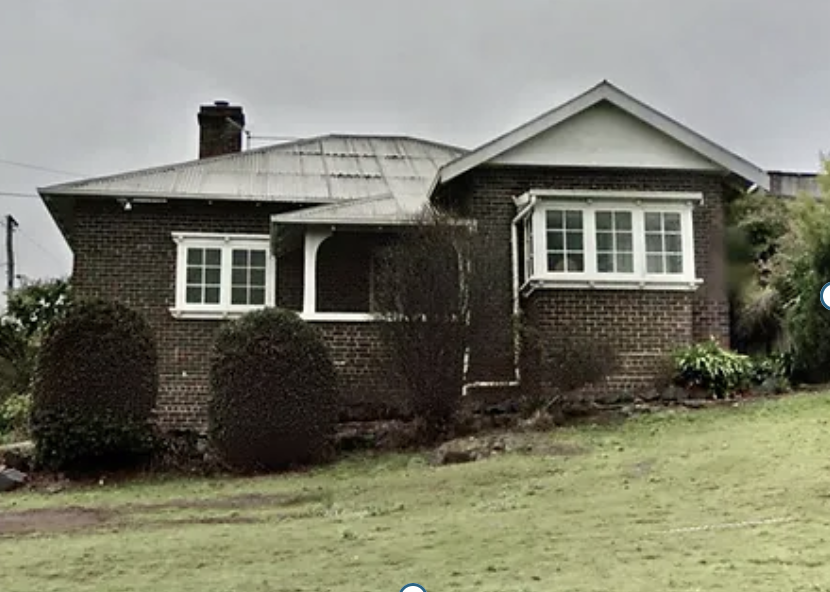
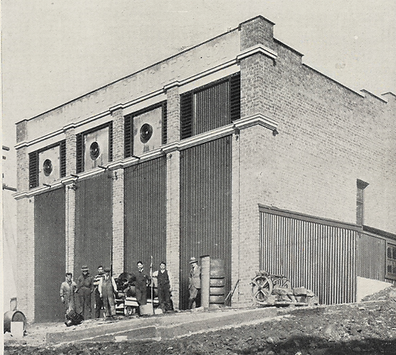
When the Cataract Hill Sub-station in Launceston officially came into operation on 18 December 1922, The Examiner reported that the adjoining residence for the engineer-in-charge Henry Appleby could be regarded as Launceston’s first electrical house.

Electricity was being used for cooking, heating, hot water, lighting and other domestic purposes and there was only one fireplace.

The Cataract Hill Sub-station was built to distribute electricity from the state government’s Hydro-Electric Department’s power station at Waddamana.

At the time it was feared the Launceston Municipal Council’s Duck Reach Power Station on the South Esk River, commissioned in 1895, would be unable to meet the needs of an increasing number of industries in the city.

Launceston had been the first city in Australia to be lit by hydro-electricity.

Plans for increased water storages in the Central Highlands to improve the all-year flow in the South Esk River were being considered but abandoned when the council signed a seven-year contract to take 3000 hp of electricity from Waddamana.

Some residents were unhappy at the cost of £16,500 a year but it doubled the amount of power available in Launceston and ensured a reliable electricity supply for the new Patons and Baldwins and Kelsall and Kemp textile mills.

At the official opening of the Cataract Hill Sub-station, Mayor George Shields said the object of getting the extra power was to assist the city’s industries and he didn’t think there would be a greater demand for electricity for domestic purposes.

This was disputed by the Hydro-Electric Department general manager John Butters who said that in Hobart the demand for electricity for heating and cooking purposes had almost outgrown the supply.

Not only were new houses being installed with modern electrical cooking and heating apparatus, but he said 75 per cent of old houses had electrical appliances installed.

It was several years before Launceston caught up to Hobart.

In 1924 the council made the decision to change the city’s electrical system from 110 volts to 240 volts which would bring the city into line with other parts of the state and the nation.

In welcoming the decision, the Daily Telegraph in April 1924 noted that Launceston was the only city in the Commonwealth whose electrical system was running on the lower voltage.

The estimated cost of the changeover was put at £41,000 but it was expected electricity would be cheaper for domestic consumers.

In his valedictory address in December 1924 Mayor Claude James was able to report that

Trevallyn and parts of South Launceston and Inveresk had been converted to 240 volts with work underway in East Launceston.

The Examiner said the mayor confidently expected a big increase in the sale of the council’s electricity for heating, cooking and hot water systems. “The price of current for this class of apparatus is low and its general use will only be a question of time.”

Images — TOP: The sub-station engineer’s house adjacent to the Cataract Hill Sub-station today, Google Maps.

Written for the Launceston Historical Society and published in The Sunday Examiner, 23 October 2022.